Showing posts with label light games. Show all posts

Tuesday, December 2, 2014

Holiday Game Gifts for Non-Gamer Kids

As the holidays approach everyone seems to offer their particular picks for ideal game gifts. Rather than bore kind readers with my particular recommendations based on my own tastes for adventure gaming fare, I thought I’d narrow the field a bit with a few qualifiers. Frequent readers know I’m an advocate of drawing new players into the hobby, with particular attention toward the younger set. As a father of a soon-to-be five year-old I’m also constantly looking for new, affordable games to garner his interest.

I chose games using a basic rationale focused incorporating several factors. The complete game had to come with a price tag of $25 or less. It must be currently available in analog format (sorry, no PDF, app or video game products). It had to have a family friendly theme since the list is intended for children ages 5-11 seeking something beyond mundane board game fare (though it also works for adults with a predilection for more involved games). The game uses mechanics and presents rules in a format kids could easily understand either on their own or with some guidance from an adult. The game also has merit – in my opinion – as a good game...not necessarily an outstanding, award-winning game, but a solid game with entertaining gameplay, decent replay value, and quality components.

Since these represent my personal recommendations, one should certainly not consider this a comprehensive list, but a catalog of suggestions limited by my own experience and impressions (and even then it’s not as complete as I’d like). While these might seem easier to acquire through online retailers, I urge readers to support their Friendly Local Game Store when possible; many can special-order titles they don’t normally keep in stock:

Dino Hunt Dice, $9.99: This press-your-luck game places players in the roles of time-traveling dinosaur hunters seeking to bag the most dinos without getting stomped. Each die has a few faces of dinos, leaves (for hiding dinos), and footprints (for stomps). A player rolls three dice, keeping dinos and setting aside stomps; three stomps and they’re done, losing any dinos they’ve captured. Players must decide when to finish their turn and keep dinos they’ve captured withouth losing everything to three stomps. There isn’t too much strategy, but kids might enjoyg it for the die rolling and dinosaur theme. (It’s cousin, Zombie Dice, uses a similar mechanic with a more grisly, less kid-appropriate theme.)

Rory’s Story Cubes, $7.99: These nine dice contain faces with pictograms to inspire storytelling. The game comes with several ideas for using them to help children create their own stories; experienced gamers and writers sometimes use them for inspiration or even solitaire adventure gaming. Two additional nine-dice sets offer icons based on Voyages and Actions, and three smaller Mix Collection packs (three dice each) have Clues, Enchanted, and Prehistoria themes. The Max version of the original story cubes, featuring larger dice, costs $19.99, well worth it for play with younger kids or for those who enjoy collecting oversized dice.

Set, $12.99: This abstract game challenges players to find sets of similar and dissimilar symbols on 12 cards arranged on the table. Each card has one, two, or three symbols of the same type and one of three different shapes (ovals, diamonds, and squiggles), colors (red, purple, and green) and shading (outline, shaded, or solid). Players watch for and collect sets of three cards each that are either all alike or all different in each attribute. Players remove the three cards in sets they successfully identify, replacing them with new ones drawn from the 81-card deck. Set’s numerous accolades include the prestigious Mensa Select Award.

D&D Starter Set, $19.99: At this price getting into Dungeons & Dragons seems affordable and easy. While I’ve not yet examined this iteration of D&D starter boxes (a subject I’m fond of exploring), reports indicate it contains everything new players need to learn about fantasy roleplaying and dive into the game, all compatible with the latest, fifth edition of the iconic adventure gaming brand.

Dungeon! $19.99: For kids who might not be ready for full-on D&D roleplaying, Dungeon! offers a board-game version of dungeon-delving, monster-killing, and treasure-looting without too many complex rules. I’ve found it a bit random and arbitrary, even with the board segmented into increasingly more difficult levels; but newcomers to fantasy themed gaming might find this an easier transition from traditional board games to roleplaying games. The content – traps, monsters, and treasures – all derive from D&D equivalents, so they provide a good thematic introduction to setting elements.

Stratego Battle Cards Game, $9.95: Fans of the Stratego board game might enjoy this card-game versions, which takes less time to set up and incorporates a different kind of strategy, all while employing the same “fog of war” element that make the original game challenging. Players deploy unit to the battlefield based on a random draw from their deck, forcing them to use forces on hand and seeking to plug gaps in their lines on subsequent turns. While the rules are based on the same unit-value hierarchy and function as the board game, it offers a few twists to give players more options.

Robot Turtles, $25ThinkFun’s edition of one of the most successful Kickstarter games of all time comes in at jus the right price point. The game gives kids control of a robot turtle wandering around a board’s obstacles to reach the prized gem; but players select command cards to enable the “Turtle Controller” (the designated adult) to move the turtle for them, giving them some fun, practical experience in skills useful in computer programming. Besides, the turtles have lasers.
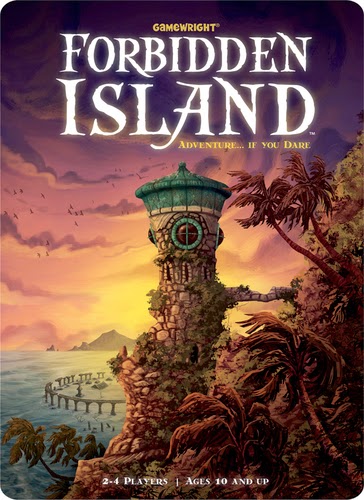
Forbidden Island, $17.99: This one might require some adult guidance, but it’s perhaps one of the best examples of a “cooperative” game (without the more intense, real-world theme of such classics as Pandemic). Players try to retrieve four treasures from an island sinking in to the sea, simulated by location tiles that randomly flood and then disappear entirely. Each has a different role with special advantages, but they all must work together to move around the board, collect resources, shore up flooding tiles, reach the treasures, and escape before the island submerges completely. Forbidden Island’s numerous accolades include the prestigious Mensa Select Award.

Beyond $25

I’d recommend almost any board game beyond the mundane fare one can find at Target or Barnes & Noble. Both chains have become more open-minded about stocking games that cater to the growing sophisticated board game culture characterized by such popular titles as Settlers of Catan, Ticket to Ride, Small World, and Carcassonne. Your Friendly Local Game Store is also a good place to browse possible board game gift ideas, ask the staff and regulars, and special order anything that isn’t in stock.

Why $25?

A few months ago I polled some folks on Google+ to help guide me in where to set the bar on this article. I asked:

What’s the maximum dollar amount you would spend on a non-electronic, game-related holiday gift for a young person between the ages of 5 and 11?

Assume the person is someone to whom you’d usually give a gift at the holiday and that the gift would be in some way related to the adventure gaming hobby, meaning it would expose them to or inspire them to explore roleplaying, card, board, and wargames (of both the board-and-chit and miniature variety). I’m not considering electronic games. Many thanks for sharing your opinions.

The $25 mark easily scored around two-thirds of the responses, with other amounts garnering a few votes here and there...and nobody going for the $100. At least one voter commented on the high cost to buy into games these days, whether a high-end board game, roleplaying game, or certainly a miniatures game. Although $50 or even $100 might buy an experienced gamer an appropriately pleasing gift, to tempt non-gamers or children into the adventure gaming hobby with an expensive gift that may or may not engage their enthusiasm remains a risky proposition.

Whatever your budget, keep games in mind as gifts this holiday season. Support your Friendly Local Game Store and encourage and cultivate a positive community of gamers in your area.

Comments....
Want to share your suggestions for $25 game gift ideas for the non-gamer set? Start a civilized discussion? Share a link to this blog entry on Google+ and tag me (+Peter Schweighofer) to comment.


Tuesday, December 10, 2013

Holiday Game-Gift Recommendations

I don’t have many gamers on my holiday gift lists; most folks just get one of my stollens (a German holiday bread I bake in several massive batches). But I like to think I’m qualified to make a few recommendations to those seeking gifts for people on their list who have enough of a casual interest in games to draw them further into the adventure gaming hobby.

GamingPresentsI’ve previously discussed several games suitable for borderline gamers and a few we’ve tried (or would like to try) as supervised games with young children. After reviewing those lists, I’m still convinced they’re right for casual gamers seeking a more involved play experience.  

Here are a few additional suggestions to add to the long lists from those other posts:

Gift Certificates: Gift certificates allow recipients to browse on their own and select something that interests them first-hand. Get one to a Friendly Local Game Store (FLGS), if one exists nearby; or to Amazon.com, which enables one to order from a broad range of game products or, if all else fails, an interesting book (or book download…). The FLGS gift certificate exposes them to a deeper slice of the adventure gaming hobby since it gets them into the store and focuses their browsing (and purchasing) on concrete items they can explore by reading sales copy, talking with staff, and in some cases even trying demos of games that pique their interest.

Books: Several books come to mind that might interest casual gamers and help them think differently about the adventure gaming hobby. A.C. Bell’s classic Board and Table Games from Many Civilizations (which I’ve featured before) offers an exhaustive study and catalog of traditional games from different historical periods and geographical regions, with discussions of the games’ origins, explanations of typical and alternative rules, and diagrams showing boards and demonstrating gameplay. Game scholar Professor Scott Nicholson summarized his research and analysis on both analog and digital game experiences in libraries in Everyone Plays at the Library (another title I’ve previously discussed here). The book offers a framework for evaluating and discussing games in a social context to help determine what kinds of games are idea for different audiences and venues, including many game suggestions. Those interested in the origins of the miniature wargaming hobby might enjoy one of the seminal works on the subject by one of the fathers of science fiction, H. G. Wells. His Little Wars (and the associated Floor Games) in many ways laid the foundation of modern miniature wargaming (along with the Prussian Kriegsspeil). While the text remains available for free online and in the public domain, several good print editions exist that are worthy of any wargamer’s library. Those seeking a suitable magazine gift might find a copy of Wargames Illustrated to tempt the history-minded reader with gaming possibilities, good cartography, and fantastic photography. Single copies often occupy the magazine racks in miniature wargaming-heavy game stores (particularly stocking Batlefront’s Flames of War supplies) and subscriptions are available online.

Euro-Style Games: More big-box retail outlets like Target and Walmart have started stocking more sophisticated board games than the usual fare of Candyland, Sorry, Risk, and Monopoly. Such popular games as Settlers of Catan, Ticket to Ride, Carcassonne, Smallworld, and Forbidden Island (or Pandemic, its more darkly themed cousin by the same designer) remain familiar to adventure gaming hobby enthusiasts but are still slowly breaking into the mainstream cultural consciousness (I’ve even seen the Star Wars: X-wing Miniatures Game at the local Target alongside Settlers of Catan.) The aforementioned games remain high in popularity among gamers (and retailers) and consist of what amounts to my list of “top” Euro-style games I’d recommend to friends seeking to dabble in the adventure gaming hobby.

Most gamers remain well-connected to internet resources, particularly venues like Amazon.com where they can maintain “wish lists” with relevant products. You don’t have to order from those online venues, but they offer a glimpse into what kinds of games -- generally and specifically -- gamers might want…just see if you can find them at the FLGS before ordering online.

Comments....
Want to offer feedback? Start a civilized discussion? Share a link to this blog entry on Google+ and tag me (+Peter Schweighofer) to comment.

Tuesday, November 12, 2013

Holiday Gaming with the Kids

As we rapidly descend into the Vortex of Chaos caused by the American holidays (typically including Thanksgiving, Hanukkah/Christmas/Kwanza, and New Year’s), thoughts turn to gatherings with family and friends…and games. I’ve reminisced about games at the holidays before: the sense of fantasy inherent in the season, the gaming-related gifts, the time to play around with one’s hobby, new toys, and friends. As my son nears the four year-old point and the coming holiday season, I started thinking about gaming with kids. HistSWGame


By “kids,” I mean preschoolers in the three- to four-year-old range, possibly as old as five or six. Some of these insights might help parents introduce older “kids” to the adventure gaming hobby, but by those ages they’re reasonably bright enough to know what engages them and thus dive into anything (like gaming) with the possibility of challenging fun (and opportunities to best their parents). I’m limiting my own discussion to board games, since, at this young age, the only roleplaying activities I expect them to show any interest for remain creative play options with toys, even if those toys are PlaySkool Star Wars figures, Disney’s Cars toys, and other normal-play fare.

Gaming with kids presents a wonderful opportunity for family time together, not simply sitting around basking in the feel-good glow of the holidays, but interacting in positive ways that can have lasting effects on behavior. We’ve established a weekly “family game night” with our Little Guy, trying some of the fare listed below; he looks forward to it every week and seems open to trying new, appropriate games. Whether he’s really understanding the games at this age, we’re still making important gains:

* We’re spending family time together without the constant distraction of electronic devices.

* He’s reinforcing lessons from preschool: following instructions, identifying numbers, letters, and abstract gaming symbols (okay, he’s not learning that last one at preschool…), realizing his actions have results and influence other people’s actions.

* He’s learning some basic gamer etiquette, such as being careful with food or drink around games, following game instructions, taking turns, re-rolling dice that tumble off the table, respecting game components, and generally learning to take advances and setbacks, victories and defeats in stride (or at least without tantrums).

My general tips for gaming with youngsters usually fall back on gentle, encouraging parenting. Some games require simplification of rules. Some require an adult to offer a good deal of assistance simply to get through a turn, though our experience has shown kids quickly learn for themselves and eventually refuse offers of help. Use games as “teaching moments” to learn numbers and letters, right and left, turn-taking, and good behavior. As adults we join games as regular players; while we sometimes give the Little Guy an advantage (playing the Millennium Falcon in the X-Wing Miniatures Game, for instance), we don’t usually hold back during games to let him win outright…he has to work for it.

Games We’ve Tried

While I have visions of my son several years from now sitting down to face his father over such games as Memoir ’44, Ticket to Ride, Smallworld, Sirocco, Axis & Allies, Carcassonne, and Ra -- not to mention the possibilities roleplaying games offer -- I realize he’s capable of only limited game challenges right now, as are most kids in the three and four year-old ranges. We’ve tried a number of games with the Little One over the course of many family game nights and a few games on weekends or with friends…and most have proved successful:

Dino Hunt Dice: This affordable, fun little game from Steve Jackson Games lets kids enjoy rolling dice and then identifying the three kinds of dinosaurs, the leaf result (dinos hiding), and the stomp result (dino hunters stomped!). Kids love dinosaurs and the game theme of hunting them tricks them into learning to identify the symbols, count their captures or stomps, and decide whether to continue and press their luck. It’s a much more thematically acceptable alternative to the game’s cousin, Zombie Dice (I’ve discussed our experience with Dino Hunt Dice in greater depth before).

Star Wars: X-Wing Miniatures Game: After seeing it played at a convention, the Little Guy wanted to play it himself. He’s seen enough Star Wars toys around the house -- and finally saw Episode IV A New Hope (it’s just good parenting) -- so he knows most of the major characters, locations, and plot points. We bought the starter set and a few (okay, more than a few) extra ships, including the Millennium Falcon, which is “his” (it also helps that it has a 360-degree field of fire, unlike other fighters that have to maneuver to line up shots). The extremely basic quick-start rules included in the game provide a practical set of rules he can follow while still keeping the adults interested. We’re hoping we’ll eventually graduate to the regular rules to enjoy more of the game’s complexities, but we occasionally work in some advanced rules, particularly those related to asteroids (though we’ve played with a basic, programmed Imperial shuttle intercept scenario, too).

King of Tokyo: The Little Guy inherited his mother’s love of kaiju movies, so this game -- with its push-your-luck dice mechanic, monster stand-ups, and power cards -- seemed a good one to test the bounds. Initially he needed some guidance in determining what he wanted to do with his dice and getting through the turn sequence, but he quickly caught on and rejected all assistance. Heck, he won the first two games we ever played! Although it’s not always apparent he’s actually using a strategy, he enjoys rolling gobs of oversized dice and collecting enough energy cubes to buy monster power cards with cool illustrations (again, without really exhibiting any strategy beyond the exciting appearance of the pictures). His favorite monster? Cyber Bunny.

Pizza Party: I found this in a local teacher store and thought the Little Guy might find it interesting, especially considering I make homemade pizza once a week, a ritual with which he often helps. It’s less a game and more an exercise in matching dice-rolled toppings to pizza cards; but it still keeps the Little Guy engaged and hones his skills at matching symbols (and rolling dice). I’ve modified it to focus solely on him rolling dice, identifying the symbols, and matching them to slices. I have some doubts about the game -- shrimp and sardines figure prominently as toppings, while olives and onions were not included -- but, using a similar competitive mechanic as Roll for It (see below), it might have more promise.

Star Wars: Escape from Death Star: The Little Guy saw Kenner’s classic board game high on a shelf in my office -- a relic of my earliest days of board gaming and sci-fi fandom -- and insisted we try it. The cardboard stand-up pieces have seen better days, the spinner often landed on a line between numbers, and the cards seemed quite arbitrary, but we all had fun bumbling around the Death Star trying to get the plans and shut off the tractor beam before escaping to the Rebel Base. I recall frequently playing it with family and friends in my youth, the first manifestation of my love for Star Wars. The Little Guy took to it easily, though he had some trouble navigating the board.

Games I’d Like To Try

Several games wait in the wings to try with the Little Guy. Some we’re just waiting for an opportunity to introduce, others we hope can push his bounds a bit further when he’s ready:

Wings of Glory: The forerunner of the Star Wars: X-Wing Miniatures Game engages my interest in World War I and II and has miniatures that capture the Little Guy’s eye. The one item he insisted I buy for him at a convention was a “cow bomber,” the Heinkel 111 plane for Wings of Glory WWII in arctic camouflage, white with dark green blotches, looking somewhat like a holstein cow’s coloration. The game’s use of cards for movement and maneuvers seems more intuitive and less complex than the full X-Wing Miniatures Game. Should we try this I’ll streamline the rules and simply have each participant reveal a maneuver card simultaneously (using only the slow maneuvers in the WWII version) before resolving shots and damage instead of plotting out two or three cards at a time. The Little Guy has requested we play “Daddy’s airplane game” sometime, so this remains high on our list.

Dungeon!: Wizards of the Coast/Hasbro re-released this classic fantasy board game with new artwork and components, and my parents -- who’ve nurtured my interest in sci-fi/fantasy and adventure gaming from the start -- got it for my birthday. It seems fairly straightforward as heroes explore the dungeon, defeat monsters, and take their treasure. The rules offer a very basic gameplay, though I’d expect adults might have to guide youngsters through the more involved procedures like traps and spells. While the board artwork seems impressive, I’m not sure it clearly indicates corridors and spaces well enough for a three year-old to navigate during gameplay. Many of the numerous components are quite small, including the illustrations, which normally remain key in captivating a kid’s interest. We’ll see if the box, board, and card artwork tempt him enough to at least start a game.

Roll for It: A copy of this recently arrived in the post as a backer reward from the game’s Kickstarter campaign. Players roll dice and match them to cards showing different combinations of results. Match all the die faces and take the card to score. The basic gameplay allows multiple players -- each with six dice of the same color -- and offers a nice balance of random die results, resource management, and press-your-luck. The Little Guy likes his dice and makes a great show of rolling them, so this one’s high on my list of new games to try.

Whatever the age of your kids, we encourage you to shut off the television, turn off the tablets and phones, and sit around the table this holiday season to enjoy some face-to-face gaming and make some fond family memories.

Comments....
Want to offer feedback? Start a civilized discussion? Share a link to this blog entry on Google+ and tag me (+Peter Schweighofer) to comment.

Tuesday, August 20, 2013

Kickstarter Satisfaction with Dungeon Roll

A Kickstarter game project I backed recently arrived in the mail and -- now that it’s in my hands -- I have to share that it was among the more satisfying Kickstarter experiences I’ve had since cautiously reviewing and backing a handful of projects engaging my interests. Frequent Hobby Games Recce readers might recall an earlier missive on Kickstarter projects focusing primarily on the numbers of projects I’ve backed, what was delivered, what wasn’t, and my core criteria that helped me determine whether I backed a particular project that initially caught my interest. At the time of that post’s writing Tasty Minstrel Games’ Dungeon Roll was the only project still undergoing funding operations through Kickstarter; now that I’ve received my copy and review my backer experience, I must admit it’s one of the more satisfying projects I’ve supported. DungeonRoll

Frequent readers might recall my affinity for press-your-luck dice games, particularly Steve Jackson Games’ Zombie Dice and its far more kid-friendly cousin Dino Hunt Dice. Designer Chris Darden’s Dungeon Roll essentially follows the form of a press-your-luck dice game with a number of innovative developments in dice management to emulate dungeon-delving-style action. Rather than a simple roll-and-keep system like the aforementioned games, Dungeon Roll employs two sets of dice, the player rolling seven white “party” dice and allocating them to vanquish monsters and activate treasures, with an adjacent player rolling the black “dungeon” dice to populate a theoretical dungeon and escalate the delve to a challenging combat encounter by accumulating dragon results. The active player manages his party dice to defeat monsters, gain treasure and experience, and bring previously used dice back into play, all while delving deeper with more dungeon dice rolled on subsequent “levels.” That’s a very broad overview of the gameplay; Dungeon Roll incorporates many nuances, including hero cards with special dice-managing abilities and treasures useful in dungeon delves, all enhancing a fun push-your-luck resource management game.

What are some of the features of both the game and the Kickstarter campaign promoting it that satisfied my expectations as a backer?

Price Point: The price to obtain a physical version of a game remains one of my primary criteria for backing a project, and at $15 Dungeon Roll made this an easy decision (even at the $19.95 retail price the game remains a good deal for a box full of dice). Domestic shipping was also included in that price (nothing made me feel like I didn’t get a good deal than when I backed an innovative game for $15 and later had to pay $12 for shipping).

Many Inclusive Stretch Goals: That $15 backer price automatically included a host of stretch goal rewards…five new hero cards (one with an additional party die), a host of new expansion pack hero cards, cards representing the dragon’s lair and graveyard locations during play, and the 10-sided level-tracker die. Normally the retail version comes in a fun treasure-chest-shaped box, but Kickstarter backers got an exclusive mimic treasure-chest-shaped box with subtle yet menacing eyes and teeth. I’ve seen Kickstarter projects whose “stretch goals” aren’t rewards as much as ad-ons backers can pay extra to receive, a kind of hollow victory for backers limited to donating at particular levels; Dungeon Roll’s inclusive stretch goal rewards helped invest backers in the campaign’s success and make it a fulfilling game package.

Production Values: The treasure-chest-shaped box might seem small compared to other games, but it’s packed with high-quality goodies. The core of the game remains the hefty handful of custom molded dice (17 in all) for the game; the numerous hero cards come on good stock with nice, tasteful images typical of fantasy-themed artwork. Experience point and treasure tokens punch out from heavy, die-cut cardboard. The addition of a dragon’s lair and graveyard location cards helps organize gameplay. Four duplicate player aid cards summarize how different dice work and remind players how they can use different treasures. The game also includes the rulebook and two hero books (one for the expansion) detailing different hero abilities. Not all these goodies come with the general retail version (I believe it lacks the heroes in the expansion pack, the Kickstarter-exclusive hero with its extra party die, two extra dungeon dice, and the two location cards); but the production values remain high for the $19.95 price point.

Light Engaging Gameplay: Dungeon Roll doesn’t promise an intense evening of gaming one might expect from something like Axis & Allies, Settlers of Catan, or even Ticket to Ride. One might even argue that Steve Jackson Games’ classic Munchkin exemplifies the light dungeon-delving game with a dose of outrageous humor. But Dungeon Roll packs a light, dice-tossing game experience with some solid resource management and enough strategy and tension as a light break from heavier fare or a primary game for a group of younger players. It’s also perfectly suitable as a solitaire diversion….

Solitaire Option: Although Dungeon Roll’s gameplay can serve solitaire players in its basic form to achieve their best score, the designers offer specific solitaire guidelines…and not just “here’s how you play Dungeon Roll by yourself,” but an experience point scale to grade performance and several notable “achievements” for encountering or overcoming certain situations.

Gamers who missed out on the Kickstarter campaign can still buy a copy (without all the cool Kickstarter exclusive bits) from their friendly local game store or other venues carrying game offerings from Tasty Minstrel Games.

Comments....
Want to offer feedback? Start a civilized discussion? Share a link to this blog entry on Google+ and tag me (+Peter Schweighofer) to comment.