Tuesday, December 23, 2014

Curling Up with Solitaire Gamebooks

I recently ordered a copy of S John Ross’ Ring of Thieves solitaire gamebook adventure thanks to a 35%-off Lulu holiday sale (alas, ordered before they announced the 50%-off hardcovers sale...). When combined with memories of immersing myself in game books – solitaire or otherwise – over the holidays during my misspent youth, I can’t help having solo gamebooks on my mind.

Frequent readers know how much I love solitaire game adventures, especially those included in roleplaying game rulebooks to help teach both the system and setting. Solo gamebooks offer a complete, self-sufficient play experience without reliance on or eventual transition to a full set of game rules in a vast, tome-like rulebook. They can scratch some of the itch for traditional roleplaying activities – a lone hero trying to overcome numerous obstacles in an adventure – but might seem limited by their streamlined game mechanics and programmed format (though that still provides a good degree of replay value as players explore different choices and meet various ends...). I realize the programmed game experience isn’t as freeform or unexpected as some other solo roleplaying game options available today, particularly those pioneered by a small but dedicated core of solo gamers exploring new tools and techniques. Like roleplaying games, solo gamebooks balance rules and story, though they employ printed text to describe situations and streamlined game mechanics to resolve conflicts. I’m not saying one kind is bad and the other good – people (even designers) have their own tastes, projects have their own parameters – but the product and the experience it delivers (intentionally or otherwise) can vary between storytelling and game.

Tuesday, December 16, 2014

Gaming Artifacts: Thieves’ World Boxed Set

The Thieves’ World city supplement from Chaosium was perhaps the first boxed campaign setting I bought way back in my earliest days in the roleplaying game hobby. The city of Sanctuary provided a wonderful yet deadly sandbox environment characters could explore. I used it decades ago with friends huddled over the fantastic city map, pulled it out again a few years ago to run with a re-tooled D6 fantasy system, and even turn to its massive random encounter tables today for occasional medieval-urban solitaire gaming.

I came to hear about the Thieves’ World boxed set and the shared-world fiction on which it was based in one of my earliest Friendly Local Game Store experiences. I’d received the Basic Dungeons & Dragons boxed set (Moldvay edition) as an Easter present from my parents; during the course of that spring I absorbed the rules, taught some friends, and ran several dungeon crawls into the Caves of Chaos for friends (and a few into dungeons of my own design). After graduating from junior high – and dreading adjusting to high school in the fall – I determined to dive further into D&D that summer. To that end I gathered my allowance and headed down to the nearby Friendly Local Game Store not five minutes from my house, Branchville Hobby. There I found the D&D Expert boxed set for $12 among the small yet growing pile of roleplaying games in the varied store more notable then for its HO-scale model railroad supplies and layout (before sports equipment took over).

Tuesday, December 9, 2014

The Editor as Everyone’s Advocate

The internet’s filled with people’s infinitely varying opinions on every subject imaginable (and a few beyond imagination, I’m sure). The definition of a good editor remains subject to those opinions; but I tend to agree with one claiming a good editor serves as an advocate for readers, and that’s a fair if broad summary. In my experience a good editor serves as an advocate on behalf of three masters: the reader, the publisher, and the author. This assumes one agrees editors still have a relevant place in today’s Internet Age where people far too often assume a spell- and grammar-check program is enough to ensure intelligible and clear communication in e-mails, blogs, and even published newspapers, magazines, and books. In a time of relatively easy self publishing enabled by computers and the internet, many talented individuals possess the sense of professionalism to produce solid work for free or for pay without the need for an entire editorial team and art department a publisher offers.

Editors primarily seek to finesse an author’s manuscript into a format easily appreciated and comprehended by the intended audience. This includes the obligatory adherence to consistent rules of spelling, grammar, and style, plus a good deal of moderating the language, varying word choice, and otherwise helping to shape a manuscript into an engaging piece of reading. But editors also represent a publisher in molding manuscripts to fit a professional objective encompassing subject matter, production schedule, and future projects. To this end editors also serve authors as guides in the writing process and in improving skills for future submissions. Publishers often need writers for upcoming projects; the more proven authors available, the better the choices in matching writers to assignments.

The letter below represents perhaps the best aspect of my work as editor of West End Games’ Star Wars Adventure Journal in the mid-1990s. I keep it to remind myself that – despite a host of game supplements I loved writing and developing, all the interesting people I met, and all the fantastic gaming experiences I enjoyed during five years with West End – I’m most satisfied I made a small yet positive difference in the lives of many young people and aspiring writers who might otherwise not bothered exploring their potential:

Dear Mr. Schweighofer,

A few months ago I submitted a short story to you…. Upon rejecting my story, you wrote me a three and a half page letter explaining why it was not up to the standards of the Star Wars Adventure Journal. I thank you for that. You see, it would have been just as easy for you to have sent me a form letter, but instead you paid close attention to what needed improving in my story and in my writing in general.

When I first received your letter I must admit that I was crushed. Writing for Star Wars meant – and still means – a great deal to me. I put the letter away for a while without reading the whole thing, the weight of the rejection pressed on me so hard that reading criticism felt like it would have caused a collapse of my confidence in my writing ability. A few days later I mustered up the strength to read the letter through. I resisted some of the points, but others were too clear to be denied. As time passed my bias against the other points faded and they were like crystal as well. Soon after, I began to look at the letter as a tool, something to help me see my weaknesses as a writer clearer. At about the same time my quest to locate a copy of Damon Knight’s Creating Short Fiction bore fruit, and the art of writing became more transparent to me. I am still in the process of learning. I write every day, and upon reading that writing the next day I blush and write something better, which I blush at a day later. I thank you a thousand times for rejecting [my story]. I realize its weaknesses more and more each day and I wonder how I could have considered submitting it. However, I know at the time it was the best I could do and I respect that. It was an important step for me as a writer, made all the more important by a compassionate editor who paid attention to a 19 year old kid struggling to forge himself into a writer.

I write you this letter so that the next time you receive a rough story from someone struggling to become a writer you might share with them the insight you shared with me (and keep on recommending Mr. Knight’s book, it is excellent). Thank you for your time, and know that this isn’t the last piece of my writing you will lay your eyes upon. Good luck and continued success with the Adventure Journal (it is fabulous).

The letter arrived in my West End Games’ office in December 1995, about halfway through my all-too-brief career with the company; I cannot recall if we actually published any of the writer’s later work, and I don’t know if the author continued his writing aspirations afterward. I’m grateful I found the time and motivation to write short critiques even of the material I rejected; in many cases it later bore fruit in the form of far more polished submissions that found their way to publication. Those short stories, source material articles, and game adventures that ultimately appeared in the Star Wars Adventure Journal endured far more scrutiny and much longer critique letters. All these efforts supported my editorial role in advocating for the interests of readers, the publisher, and authors in the name of engaging writing.

That same work ethic – spending time working with authors not simply to improve the project at hand but their overall abilities for future assignments – gave other writers guidance for improving their work later reflected in other mainstream West End projects. I recall spending an hour or so with an author at GenCon discussing a hard critique of a rough manuscript for a sector setting sourcebook; he was a fan, not a writer (though a talented professional in another field) who many years later went on to contribute to both Wizards of the Coast’s and Fantasy Flight Games’ subsequent iterations of a Star Wars roleplaying game.

Few professional editors have this kind of time, especially when faced with massive slush piles of submissions or a huge backlog of manuscripts awaiting their editorial attention in the often rushed process to bring material to publication. I’m grateful I had both the time and the position to evaluate writers’ work and offer some small guidance in improving their craft; I hope many have continued exploring their potential as writers, especially given the far more numerous outlets for their work in an Internet Age enabling many to disseminate their writing to a broad audience. Thanks to social media I occasionally encounter someone who says something like, “My proudest moment trying to break into the industry was my rejection letter from the SWAJ,” or “Do you remember that submission I made to the Adventure Journal years ago?” I’m humbled that I have in some small way contributed to their further work as fans or professionals in the adventure gaming hobby, from fanzines to freelancing and beyond.

I suppose at heart I have a large teaching streak in me; I’ve often considered, and quickly set aside, the prospect of becoming a professional teacher. At various points in my past I’ve tried encouraging people to pursue their interest in writing through editorial critique letters, workshops for young people, and other publication-related activities. I don’t believe everyone’s a New York Times-bestselling author, but I think anyone with an interest in writing deserves a chance – and a little encouragement – to explore the craft and engage their creativity.

Lately, thanks to contacts in social networking, I’ve considered contacting people with promising game ideas and offering to develop, edit, and produce their work. I’ve not followed through much; I suppose I’m wary of working to publish other people’s gaming projects when many of my own sit on the back burner thanks to my lack of time, focus, and energy given my full-time parental duties. I’ve done a little editorial consulting, an endeavor I might pursue more in the future; the entire editorial critique process seems much easier in a world with e-mail and online face-to-face conferencing instead of printing out letters to send off in the post. I realize I miss working with authors to further develop and refine their ideas and presentation with an eye to bringing a project to publication and (hopefully) appreciation by a growing fan readership. It’s easier with the backing of a brick-and-mortar professional publishing house (and a world-famous intellectual property license); but for now I’m content that my past editorial work and the few people it inspired remains a small candle to sustain me.

Comments....
Want to add your opinion? Start a civilized discussion? Share a link to this blog entry on Google+ and tag me (+Peter Schweighofer) to comment.


Tuesday, December 2, 2014

Holiday Game Gifts for Non-Gamer Kids

As the holidays approach everyone seems to offer their particular picks for ideal game gifts. Rather than bore kind readers with my particular recommendations based on my own tastes for adventure gaming fare, I thought I’d narrow the field a bit with a few qualifiers. Frequent readers know I’m an advocate of drawing new players into the hobby, with particular attention toward the younger set. As a father of a soon-to-be five year-old I’m also constantly looking for new, affordable games to garner his interest.

I chose games using a basic rationale focused incorporating several factors. The complete game had to come with a price tag of $25 or less. It must be currently available in analog format (sorry, no PDF, app or video game products). It had to have a family friendly theme since the list is intended for children ages 5-11 seeking something beyond mundane board game fare (though it also works for adults with a predilection for more involved games). The game uses mechanics and presents rules in a format kids could easily understand either on their own or with some guidance from an adult. The game also has merit – in my opinion – as a good game...not necessarily an outstanding, award-winning game, but a solid game with entertaining gameplay, decent replay value, and quality components.

Since these represent my personal recommendations, one should certainly not consider this a comprehensive list, but a catalog of suggestions limited by my own experience and impressions (and even then it’s not as complete as I’d like). While these might seem easier to acquire through online retailers, I urge readers to support their Friendly Local Game Store when possible; many can special-order titles they don’t normally keep in stock:

Dino Hunt Dice, $9.99: This press-your-luck game places players in the roles of time-traveling dinosaur hunters seeking to bag the most dinos without getting stomped. Each die has a few faces of dinos, leaves (for hiding dinos), and footprints (for stomps). A player rolls three dice, keeping dinos and setting aside stomps; three stomps and they’re done, losing any dinos they’ve captured. Players must decide when to finish their turn and keep dinos they’ve captured withouth losing everything to three stomps. There isn’t too much strategy, but kids might enjoyg it for the die rolling and dinosaur theme. (It’s cousin, Zombie Dice, uses a similar mechanic with a more grisly, less kid-appropriate theme.)

Rory’s Story Cubes, $7.99: These nine dice contain faces with pictograms to inspire storytelling. The game comes with several ideas for using them to help children create their own stories; experienced gamers and writers sometimes use them for inspiration or even solitaire adventure gaming. Two additional nine-dice sets offer icons based on Voyages and Actions, and three smaller Mix Collection packs (three dice each) have Clues, Enchanted, and Prehistoria themes. The Max version of the original story cubes, featuring larger dice, costs $19.99, well worth it for play with younger kids or for those who enjoy collecting oversized dice.

Set, $12.99: This abstract game challenges players to find sets of similar and dissimilar symbols on 12 cards arranged on the table. Each card has one, two, or three symbols of the same type and one of three different shapes (ovals, diamonds, and squiggles), colors (red, purple, and green) and shading (outline, shaded, or solid). Players watch for and collect sets of three cards each that are either all alike or all different in each attribute. Players remove the three cards in sets they successfully identify, replacing them with new ones drawn from the 81-card deck. Set’s numerous accolades include the prestigious Mensa Select Award.

D&D Starter Set, $19.99: At this price getting into Dungeons & Dragons seems affordable and easy. While I’ve not yet examined this iteration of D&D starter boxes (a subject I’m fond of exploring), reports indicate it contains everything new players need to learn about fantasy roleplaying and dive into the game, all compatible with the latest, fifth edition of the iconic adventure gaming brand.

Dungeon! $19.99: For kids who might not be ready for full-on D&D roleplaying, Dungeon! offers a board-game version of dungeon-delving, monster-killing, and treasure-looting without too many complex rules. I’ve found it a bit random and arbitrary, even with the board segmented into increasingly more difficult levels; but newcomers to fantasy themed gaming might find this an easier transition from traditional board games to roleplaying games. The content – traps, monsters, and treasures – all derive from D&D equivalents, so they provide a good thematic introduction to setting elements.

Stratego Battle Cards Game, $9.95: Fans of the Stratego board game might enjoy this card-game versions, which takes less time to set up and incorporates a different kind of strategy, all while employing the same “fog of war” element that make the original game challenging. Players deploy unit to the battlefield based on a random draw from their deck, forcing them to use forces on hand and seeking to plug gaps in their lines on subsequent turns. While the rules are based on the same unit-value hierarchy and function as the board game, it offers a few twists to give players more options.

Robot Turtles, $25: ThinkFun’s edition of one of the most successful Kickstarter games of all time comes in at jus the right price point. The game gives kids control of a robot turtle wandering around a board’s obstacles to reach the prized gem; but players select command cards to enable the “Turtle Controller” (the designated adult) to move the turtle for them, giving them some fun, practical experience in skills useful in computer programming. Besides, the turtles have lasers.

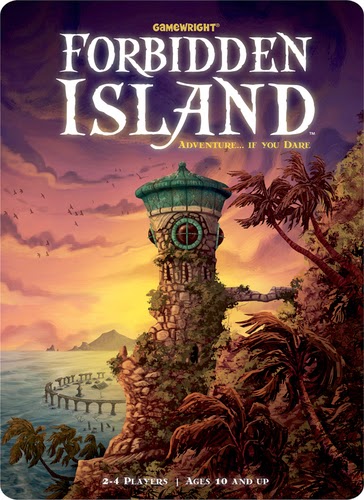
Forbidden Island, $17.99: This one might require some adult guidance, but it’s perhaps one of the best examples of a “cooperative” game (without the more intense, real-world theme of such classics as Pandemic). Players try to retrieve four treasures from an island sinking in to the sea, simulated by location tiles that randomly flood and then disappear entirely. Each has a different role with special advantages, but they all must work together to move around the board, collect resources, shore up flooding tiles, reach the treasures, and escape before the island submerges completely. Forbidden Island’s numerous accolades include the prestigious Mensa Select Award.

Beyond $25

I’d recommend almost any board game beyond the mundane fare one can find at Target or Barnes & Noble. Both chains have become more open-minded about stocking games that cater to the growing sophisticated board game culture characterized by such popular titles as Settlers of Catan, Ticket to Ride, Small World, and Carcassonne. Your Friendly Local Game Store is also a good place to browse possible board game gift ideas, ask the staff and regulars, and special order anything that isn’t in stock.

Why $25?

A few months ago I polled some folks on Google+ to help guide me in where to set the bar on this article. I asked:

What’s the maximum dollar amount you would spend on a non-electronic, game-related holiday gift for a young person between the ages of 5 and 11?

Assume the person is someone to whom you’d usually give a gift at the holiday and that the gift would be in some way related to the adventure gaming hobby, meaning it would expose them to or inspire them to explore roleplaying, card, board, and wargames (of both the board-and-chit and miniature variety). I’m not considering electronic games. Many thanks for sharing your opinions.

The $25 mark easily scored around two-thirds of the responses, with other amounts garnering a few votes here and there...and nobody going for the $100. At least one voter commented on the high cost to buy into games these days, whether a high-end board game, roleplaying game, or certainly a miniatures game. Although $50 or even $100 might buy an experienced gamer an appropriately pleasing gift, to tempt non-gamers or children into the adventure gaming hobby with an expensive gift that may or may not engage their enthusiasm remains a risky proposition.

Whatever your budget, keep games in mind as gifts this holiday season. Support your Friendly Local Game Store and encourage and cultivate a positive community of gamers in your area.

Comments....
Want to share your suggestions for $25 game gift ideas for the non-gamer set? Start a civilized discussion? Share a link to this blog entry on Google+ and tag me (+Peter Schweighofer) to comment.


Tuesday, November 18, 2014

Notable Features in Barbarians of Lemuria

I recently acquired a print copy of Simon Washbourne’s Barbarians of Lemuria (Legendary Edition) and was pleasantly satisfied by many elements within that appealed to my particular roleplaying game tastes...and might interest readers of Hobby Games Recce with similar inclinations. The game mechanics and presentation offer an original swords and sorcery setting with a basic task resolution system and plenty of room for rich character development.

I’m a casual fan of the Conan material from Robert. E. Howard, having enjoyed the original literature, the comic book series (during a brief foray into that medium in my misspent youth), and the 1982 John Milius Conan the Barbarian film interpretation (and other similar sword and sorcery movie fare). I prefer my fantasy roleplaying with minimal magic, such as simple cantrips for characters and more powerful, sinister magic beyond their capability as part of the arch-enemy’s arsenal. The Barbarians of Lemuria setting incorporates many of these elements in a well-presented setting without binding them within the vast Conan continuity (and hence opening itself up to copyright infringement issues).

Barbarians of Lemuria contains a host of elements that appeal to me:

Page Count: The game packs everything needed to play into 104 pages, packed with plenty of illustrations evocative of the setting, game mechanics, examples, original monsters, inspirational character creation material, a gazetteer of the world, and a few short adventures. It’s not as comprehensive as some gamers might like, but it’s filled with enough functional mechanics and setting information to stimulate one’s imagination in creating and running exciting swords and sorcery adventures.

Accessible Setting: The epic background for Barbarians of Lemuria fits on two pages and outlines an epic struggle against the corrupt Sorceror-Kings and their magical technology. A series of disasters and returns imbue the land with plenty of ruins, magical mutations, and the promise of fantastic treasures, all while the Sorceror-Kings sulk on their island fortress planning their revenge. This epic provides some solid setting elements for Lemuria: a lost golden age of technology leaving behind ancient relics and ruins the heroes might explore (a theme within one of fantasy roleplaying gaming’s first settings, Empire of the Petal Throne), and distant yet powerful shadow adversaries to lurk in the background or scheme behind the scenes. Elements of character creation also tie heroes to locations in the setting or typical professions in the genre.

Innovative Character Creation: Building a character focuses on three sets of “stats” (though one isn’t really a stat at all). In each category players distribute four points among four different categories, with a value of zero representing average ability. First players distribute four points among their attributes: strength, agility, mind, and appeal (fairly standard characterization concepts). Then they distribute four points among four combat abilities: brawl, melee, ranged, and defense. Finally players choose four “heroic careers” from among 20 genre-inspired professions to define their characters’ pasts and round out their generalized skill sets.

Genre Careers: Career choices reflect the sword and sorcery genre. Each of the 20 careers includes a parenthetical alternative, an optional profession label to cover a similar spin on a career; for instance, it offers “Barbarian (or Savage),” “Serving Wench (or Courtesan),” and “Thief (or Rogue).” Brief descriptions offer ideas on relevant skills and important attributes.

Core Resolution System: Resolving actions boils down to a player rolling 2D6 to get 9 or higher for success. Depending on the situation they may add to their roll the value of relevant attributes, combat abilities, or careers; factors such as a task difficulty, range, or target’s defense value may subtract from their die roll. These aren’t huge bonuses, but can increase through experience. Boons and flaws (see below) enable players to roll an additional 1D6 in certain circumstances, adding the two highest results for boons and the two lowest results for flaws.

Boons & Flaws: Sure, lots of roleplaying games include some kind of advantage/disadvantage system in their character creation rules, but Barbarians of Lemuria presents sets of each for every location that can serve as a hero’s birthplace, giving them not only some game-specific bonus or penalty but some material on which to draw in further defining their character within the setting. Characters get one free boon and can gain additional boons by taking a flaw or permanently reducing their Hero Point total.

Hero Points: Here’s another element used in many other roleplaying games, points characters can spend during the game to alter situations in their favor. In this game characters begin with five Hero Points they can use in a variety of ways within the framework of the core resolution system: to reroll for a particular task; to alter a basic success into a more powerful “Mighty Success” or transform that into the ultimate “Legendary Success”; to shake off wounds or stabilize a dying character; or to define situational elements in one’s favor (such as finding a loose stone in a prison cell wall, discovering some useful equipment nearby, or using a coincidence to their advantage). Characters begin the game with five Hero Points and gain back those they spent at the end of an adventure.

Barbarians of Lemuria also provides the basic framework of many other roleplaying games; Lifeblood points for tracking health, weapons and armor, a freeform spell system that reflects the rare nature of magic in the genre, non-traditional monsters tied to setting locations, and one-sentence descriptions of various gods of Lemuria. It’s a complete game, but relies on experienced gamemasters and players to work together to use the rules to create a play environment that works for them.

Almost Overlooked

I must admit I passed over this game in its earlier incarnations despite the author’s excellent reputation for interesting games. Washbourne’s produced a host of small, independent, and often innovative roleplaying games. His 1940 – England Invaded! caught my eye when it first emerged as part of the 24-Hour RPG challenge and when he released a free PDF version with more substance; it satisfies my interest in WWII themes, in this case with a fantastic alternate-history twist.

I downloaded one of the earlier, free versions of Barbarians of Lemuria in PDF format when it first appeared, hoping for something a bit more satisfying than the d20 officially licensed Conan material available at the time. My ambivalence toward earlier editions probably stemmed from an uninspiring layout and mediocre artwork, though the author deserves credit for creating his own illustrations in those versions. These factors – PDF and uninspired artwork – led me to overlook it after an initial perusal; hence it languished unread in some archived folder on my laptop, as do many worthy and unworthy gaming PDFs, since I prefer to read the old-fashioned way from printed books than transient words on a screen.

In fairness the Legendary Edition of the rules has overcome these two drawbacks. The new illustrations, while remaining relatively basic line art, evokes characters and scenes characteristic of the sword and sorcery genre. Having the option of obtaining a print version means I can sit down and read it without the often mind-numbing hypnosis of passive words on my computer screen, easily flipping back and forth around pages to cross-reference game and setting concepts. I noticed a few refinements in the game mechanics and organization from previous editions; while the current edition is far from perfect in terms of organization and layout, it’s clear years of active play and development have made their positive impression.

Comments....
Want to offer feedback? Start a civilized discussion? Share a link to this blog entry on Google+ and tag me (+Peter Schweighofer) to comment.


Tuesday, November 11, 2014

Hedging Bets against the Fog of War

The Fog of War – the random elements in games, whether simulating the variable performance of troops in wargaming battles, pieces on the board, or adversaries in roleplaying games – can foil the best strategies, constructed decks, assembled forces, or crafted character. The degree to which such uncertainties reign over the gaming table can seriously affect one’s play experience. It’s one thing to lose to a formidable opponent, but another to lose to the capricious nature of the dice.

Brave British troops doomed in the face
of hordes of Zulus and poor die rolls.
If kind readers would pardon some (hopefully) neutral political analogy, regrettably on my mind thanks to the recent mid-term elections... Take political candidates; they hedge their bets against the uncertainties of the minority of the electorate that actually gets out to vote. Some run in the right gerrymandered district (or carpet-bag their way there) and garner enough shadow-corporate sponsorship to flood the airwaves and ether with ads claiming their opponents are inspired by the devil and eat babies for breakfast (not really quite that bad, but they might as well say that to play on voters’ fears and emotions). Unlike gamers, politicians can draw upon the unlimited resources of contributions from near-anonymous special-interest donors instead of a limited pool of game elements intentionally balanced for some semblance of fair gameplay. (And no, I’m not suggesting politics should be reformed on a gameplay model.)

Even seemingly well-balanced games can subject players to the random whims of chance, no matter how much players try hedging their bets against failure. I’ve tried crafting various squadrons for the X-wing Miniatures Game, assembling combinations of elements like pilot abilities, starship stats, and different upgrades to fit within the 100-point tournament guideline in what I think might prove a winning combination. On paper they might prove quite powerful; but when I’m rolling poorly and the opponent consistently rolls well, I have little chance of success. Last year in a The Sword and the Flame convention game I lost most of four companies of British soldiers against one “horn” of a Zulu force because I kept rolling poorly: I scored minimal ranged hits, got massacred in close combat, and failed several key morale checks (nothing encourages dice to roll poorly than having the referee say, “Roll anything but a six!” Guess what that six sider is rolling...). No wonder there’s been a movement of “dice shaming” in gaming culture to highlight dice that consistently roll poorly or fail at crucial moments (all feeding the adventure gaming hobby’s dice fetishism). Even games with carefully crafted forces like Magic: The Gathering – with no random dice elements – subject players to the uncertainty of when they draw certain cards or combinations to deploy against opponents. Players understandably become frustrated when their best preparations fall victim to the capricious nature of the dice or the luck of the draw.

Games by their very nature represent a contest between players; so naturally one expects to encounter some feelings of frustration while trying to win against adversaries. When games offer players a means to hedge their bets against the whims of chance they offer a sometimes false sense of control over their gaming fate. A good game combines the uncertain elements of chance, a player’s ability to plan broad strategies, and the opportunity to react as tactical opportunities develop through gameplay. Certainly gamers like a bit of tension in their games – it’s no fun when you’re certain you’ll always win or when you know you’ve already lost but the game’s still not over – but there’s a fine line between tension and futile frustration. It proves a good test of players’ sportsmanship. I’ve played in games where, through poor luck of the dice, I knew I was beaten and was just playing out turns until the game ended. I’ve felt unworthy winning games by sheer luck of the dice, especially when my opponent fielded formidable forces or played exceptionally well (and was, himself, foiled by poor dice rolls).

I’ve been rebuked before for framing issues in terms of a “spectrum,” but this aspect of the Fog of War element actually falls along a spectrum. At one end stand games dominated by random elements such as War (if one could call that a “game,” a subject I’ve discussed before), Yatzee, Monopoly, even such Euro-game fare as Carcassonne; these often rely on providing a random situation or set of elements players must try to use to their advantage. At the other end stand games with no randomized elements like chess, Diplomacy, and Stratego where the Fog of War concept exists as uncertainty wholly generated by the players in terms of deployment and strategy, with clear-cut conflict resolution. (I’m sure such generalizations will spawn some contentious if civilized debate; I don’t pretend to approach issues presented in this blog in a comprehensively scholarly manner nor with particularly exacting attention to semantics in the diverse and often subjective English language.) Many games fall somewhere in the middle of that spectrum, offering the illusion that players can somehow exert control over their success by crafting a good deck, squadron, force, character, or strategy that’s still subject to random elements like dice or the luck of the draw.

Is on end of the spectrum better than the other? Of course not. Each extreme challenges players in different ways. At one end players receive randomized elements they must use to their best advantage in the situation. In the other they carefully arrange their resources and maneuver them knowing their strong points. Those in between can offer a false sense of control by juxtaposing random elements against prepared strategies. But good games maintain the tension until the very end, balancing uncertainty over success or failure.

Comments....

Want to offer feedback? Start a civilized discussion? Share a link to this blog entry on Google+ and tag me (+Peter Schweighofer) to comment.

Tuesday, November 4, 2014

Gaming Spaces

I’ve spent more than 30 years “around the gaming table,” a place that has ranged from the dining room table at home and friends’ houses to game stores, public and school libraries, and vast convention halls. Sometimes “gaming tables” seemed cozy and focused, other times they got cramped, crowded, and loud. I’ve experienced more gaming locations than I can recall, yet both the good and the bad still stand out in my memory and serve as fodder for some disparate – and hopefully amusing – recollections.

A small, regional convention with
gaming tables surrounded by vendor booths.
I started gaming around our modest dining room table, a space normally reserved for holiday meals and guests which I slowly took over for hosting players of various kinds of games. As my circle of gaming friends grew we migrated from one player’s home to the next, usually around the kitchen table but occasionally gathered on den couches or around a coffee table. Weekend afternoons seemed best, but if we strayed into the after-dinner hours the host’s parents often made a cameo appearance at some point to ask us to “keep it down, we’re trying to sleep.” The most hospitable home – the place where everyone went to hang out, whether they were gaming, watching videos, or just spending time together – possessed a seemingly endless supply of chips and soda, had parents who didn’t intrude if we made some noise, and always had a cushy sofa on which we were welcome to crash after game sessions that ran into the wee hours of the morning. (This particular household hosted the memorable New Year’s Eve gaming event about which I’ve reminisced before.) On several occasions friends tried having extended gaming weekends, what some might consider mini-conventions, at their house (or at several homes over the weekend), and these varied based on the general hospitable nature of the family. Understanding parents, comfortable gaming spaces, and plenty of food seemed key factors in successful home gaming environments, at least in my younger days.

I’ve played games in library spaces, both public and academic. I was kicked out of my high school library for nothing more than playing a game I designed that involved dice; the British-born librarian felt that dice were inappropriate (a cultural view I learned about later, from R. Talsorian’s Castle Falkenstein game no less) and hence banished us. I later ran sessions of my Creatures & Caverns game for friends in the cafeteria during free periods. I spent a summer running weekly Dungeons & Dragons games at my hometown public library, butting heads with the two hard-core gamemasters who organized the program because they didn’t feel I was playing the game the way they felt was right. I had a horde of 10 kids all around 10 years old in a meeting room alcove off the main children’s section, hardly ideal for getting very far in the adventures I designed for the program. More recently I spent about a year volunteering at the local public library’s monthly teen board gaming sessions in a large programming room separate from the rest of the library lest we disturb the sacred silence of those hallowed halls; I taught and hosted Pirateer and Forbidden Island. Keeping the potentially loud and boisterous gaming insulated from the rest of the quiet library enables participants to enjoy themselves without worrying that they’re distracting other patrons.

A good game store maintains some space, permanent or temporary, for in-store gaming. Throughout my gaming days I’ve seen a vast range of gaming spaces within stores, from dingy back-rooms near the bathroom and corners hidden behind retail shelves to large portions of the store devoted to tables for board, card, and wargames. I’m grateful both my current Friendly Local Game Stores (FLGS) have ample space for in-store gaming; the closest has eight long, folding tables in four rows occupying the middle of the retail space (with shelves of comics and games lining the walls), and the farther one has half the store space dedicated to game tables, including shelves for storing wargaming terrain and a back room for select games (and a table suitable for roleplaying games tucked away at the back of the retail space). I’ve participated in games at the former – a few X-wing Miniatures Game tournaments, the occasional Saturday night casual X-wing game, some board game demos at International Tabletop Day – and while things can get a little crowded and noisy, the environment remains welcoming to gamers thanks to friendly players and hospitable staff. Both stores have the adventure gaming business savvy to offer sodas and snack foods for sale to cater to gamer’s appetites and give them an opportunity to make at least a small purchase in gratitude for providing a good gaming location.

Gaming in hotel suites sometimes adds
an element of exclusivity...especially
with special guests.
Gaming conventions offer occasional opportunities for exposure to new games and players as well as reliable favorites with old friends. The convention size often dictates the nature of the gaming space. Major conventions like GenCon and Origins host games in a variety of spaces ranging from hotel meeting rooms to vast exhibition halls. Smaller regional conventions often rely on the event space – typically a hotel with conference facilities – scheduling gaming in everything from ballrooms and meeting rooms to hotel rooms with beds removed and banquet tables and chairs crammed into the space. I’ve run games at many conventions, including one in a cavernous and noisy hall at GenCon back in Milwaukee, many in medium-sized meeting rooms and ballrooms with 5-10 tables, and a few stuffed into the aforementioned hotel rooms crammed with one or two banquet tables. I don’t always like the latter; while they often afford privacy and quiet (as long as there isn’t a second table jammed into the room), they remain so well-removed from the main gaming halls the non-existent foot traffic discourages both casual spectators and last-minute participants. I appreciate the quiet, but it seems detached from the general community feeling of smaller conventions. They remain perhaps the best spaces – when not so crammed – for private games, such as any of the Star Wars Roleplaying Game sessions I’ve run where players bid in a charity auction for seats at the table with a famous author guest like Timothy Zahn. At cons I generally prefer gaming spaces closer to other programming activities, whether a large ballroom with many tables or smaller meeting rooms with a handful of tables. Perhaps the most unexpectedly pleasant convention game experience came from player generosity; the game was originally scheduled for a meeting room with several other active tables (with groups that promised to get loud and rowdy), but two of the participants had booked a hotel suite and – with the consent of the rest of the players and a note left at the table – we gladly adjourned to the suite’s dining room table for an intense game fueled by the hosts’ stash of snack foods and beverages.

Where do we play games? The answer often depends on one’s particular type of game, personal resources, and general opportunities. Most broad location categories themselves can range between ideal and intolerable, though lucky gamers find or create gaming situations that work best for them. What makes ideal location conditions for games? Do certain spaces lend themselves better to different games? What kinds of compromises in environment do we make to engage with others in gaming? Despite noise, crowds, and other distractions, gamers can make the best of their situations to focus on their hobby and ensure their own play experience remains positive. The times when I felt the game location seemed disruptive were the times when I allowed those issues to impact my own experience. A positive attitude combined with others helping to improve problematic gaming spaces goes a long way to providing everyone with a better play experience.

Comments....

Want to offer your opinions on gaming spaces? Start a civilized discussion? Share a link to this blog entry on Google+ and tag me (+Peter Schweighofer) to comment.