Showing posts with label parenthood. Show all posts

Tuesday, January 7, 2025

Finding Joy in the Past Year

 Think only of the past as its remembrance gives you pleasure.”

Jane Austen

I’m slow in my New Year’s appreciations, given how numerous holiday preparations and celebrations in November and December consume my life. That said, I wanted to look back at 2024 to remind myself of the highlights that brought joy to me amid occasional heartache and disappointment...and in the face of the anxieties, hardships, and challenges I — and the world — face in 2025. The Jane Austen quote I used in my last blog post encouraged my usually pessimistic self to reflect on positive events that uplifted us throughout 2024. It comes as no surprise they’re mostly related to games, books, and history. I’m hoping these memories sustain and inspire me through the difficult times ahead.

Tuesday, August 8, 2023

Summertime Gaming

Cannon at Drewry's Bluff.
My son’s school year begins tomorrow, an early start that puts an end to the carefree days of summer. I don’t get as much done since I’m busy with yard duties, household projects, and entertaining my son with a weekly day trip and other diversions. We’re both looking forward to getting back into some kind of somewhat productive routine. We found some opportunities for gaming during the summer, with some engaging games we really enjoyed. I’m hoping we can sustain our gaming momentum into the more structured part of the year as I tempt him with themes that interest him.

Tuesday, October 30, 2018

A Game that Will Live in Infamy

I fear all we have done is to awaken a sleeping giant
and fill him with a terrible resolve.”

Admiral Yamamoto

In my spare/parenting time I’m preparing a Wings of Glory scenario for Pearl Harbor. My son, the Little Guy, now eight years old, has discovered that his ability to read means he can explore different books that interest him, both fiction and non-fiction. Earlier this year he and a friend developed a fascination for books about the Titanic disaster they found in the school library. I shared with him a few Titanic books from my own library. Then he discovered a book about Pearl Harbor. He started asking me questions. I encouraged his curiosity and we both undertook some research, exposing him to some historical events for the first time and allowing me to revisit them. Ultimately it led him to ask me if I had any games about Pearl Harbor we could play, one in which he could play the Japanese. I took it as a challenge, one to enhance his knowledge and fuel his curiosity. And I’ll admit it’s put me in an odd bind I’ve faced before: how do we feel about wargaming events in our nation’s past that evoked – and still evoke – deep feelings.

Tuesday, May 23, 2017

Summertime Gaming Can Reinforce Lessons

Today’s the last day of school on the medieval frontier of Northern Virginia...the medieval side. (Alas, our school board thinks starting school the second week of August, putting the first term SOL testing right before the December holiday break, will increase SOL scores instead of focusing on paying teachers decently and letting them teach instead of handle bureaucracy....) Already last week summertime recommendations started coming home: a list of recommended “series” books for summer reading, a 22-page handout with math problems to solve, a list of educational websites to visit, a page of “dice games” that are really just math exercises with dice, and a thick, door-stop-sized reading/writing workbook someone ordered but apparently didn’t use all school year. All this comes slathered in the repulsive stigma of homework, something the seven year-old Little Guy has grown to dislike and resist throughout the school year, more so in these final weeks before summer vacation. So what’s a parent to do? I’m turning to two things we know and enjoy: fun themes and games.

The Little Guy – and most elementary school kids, I suspect – maintains a host of interest in various media properties: Minecraft, Transformers, Pokemon, Star Wars (particularly Clone Wars), Godzilla, Doctor Who. Interest in them waxes and wanes, but they sometimes help him engage in educational activities disguised as fun. (I’ve blathered on about themes in games before in “Introducing Newcomers to Games: Theme & Mechanics.”) Just the other weekend we caught him sitting in bed reading a Star Wars book aloud to our cats (granted, they like hanging out in his comfy bed anyway, but apparently reading was a bonus). We’re embarking on a first-edition Star Wars Roleplaying Game campaign at his insistence; so far he’s enjoyed accurately adding up the results of numerous d6 rolls, especially when tossing handfuls of dice when using a Force Point. He reads all the powers and attacks on the cards when we play the Pokemon collectible card game.


Tuesday, December 27, 2016

Very Geeky Holidays

I’m thankful that throughout my life the holidays have always been a time to indulge my inner geek and share it with others. It’s become a quiet tradition, not always something planned, but something that simply happens on its own. But before I wander into my rambling missive on the subject, I want to wish all Hobby Games Recce readers, everyone who supports my gaming efforts here, at Griffon Publishing Studio, and elsewhere, a joyous and geeky holiday season...or, if you prefer, Christma-yu-kwanza-kah-nalia (hopefully you can find your specific holiday somewhere in there).

“And what rough beast, its hour come round at last,
Slouches towards Bethlehem to be born?”
The holidays bring out some of the most sacred family traditions among western cultures (and I’m assuming among some non-western cultures, too). Growing up we had some pretty standardized practices adjusted over time for our ages, involvement in religious rituals, and other changing factors: the Christmas tree went up and was lit according to a particular schedule; trains often ran around it to enhance the holiday’s playful spirit; we shared a traditional Christmas Eve dinner of ham, potatoes, pinkelwurst, and kale, with stollen and cookies for dessert, with a full turkey dinner on Christmas Day (I have no idea where my parents found the energy to do both); we opened presents, one at a time, taking turns in order from oldest to youngest (I assume as a lesson in patience for us younger folk); and, of course, we attended church at some point, first the early evening children’s pageant, later the spectacle of midnight mass with music, lights, and ceremony rivaling the Radio City Music Hall Christmas Spectacular. Even though the years have passed and I’m married with a child of my own, our household’s new traditions have evolved, some carried over from our treasured past and others we establish together as a family. We still set up a tree and trains, but we also festoon the front of the house with modest holiday lights and, when I bother, decorate our eight foot-tall sasquatch stand-up, “Skookums,” in the front yard (left over from Halloween); I bake stollen to give as gifts to friends and family; we enjoy the traditional ham dinner, though we graze through leftovers on subsequent days; and we open presents Christmas morning instead of Christmas Eve with a sense of well-ordered chaos.


Tuesday, March 15, 2016

Star Wars Duels Redefines “War” Card Game

I recently picked up Star Wars Duels, a card game from Hasbro with an obviously popular theme, at the behest of the six year-old Little Guy, who saw it on sale at our grocery store and immediately wanted it to try for our weekly family game night. I’m not a huge fan of card games, though we have a number we enjoy because they’re right at the Little Guy’s level and work with engaging themes (particularly Godzilla Stomp and Otters). Star Wars Duels pleasantly fits into that category, combining modified “War” gameplay with colorful images of Star Wars characters kids love.

The 54-card deck comes with a rules flyer and a reference card for some of the symbols used in the game. They’re standard playing card-sized cards, though given the box size and the intended audience I somewhat expected slightly larger, more kid-friendly cards. Each card comes with a blue, red, or yellow border for the heroes, villains, and neutrals (mostly creatures); a full-color photograph of the character; their name; a card value from 1 to 10; and one or two symbols related to the character’s affiliation. The heroes and villains each have 23 cards, with 8 yellow cards devoted to neutrals. Card values seem a bit inconsistent, but vary from a standard playing card deck spread: 8 to 9 cards of the lower values (1–3); 4 to 7 cards of the middle values ( 4–6); and 3 to 4 cards of the highest values (7–10).


Tuesday, March 1, 2016

WEG Memoirs: Young Writers Workshops

Sifting through boxes in the basement often uncovers lost bits of my past. My latest foray brought forth a small packet of papers: a pile of photocopied Star Wars line art from West End Games products, a sheaf of double-sided worksheet forms about creating planets and aliens, and some note cards with talking points for a seminar I gave way back in the mid-1990s. Long ago while working as an editor with West End I had several opportunities to participate in young writers’ workshops in my hometown. As a writer and editor who worked on the Star Wars Roleplaying Game and managed its quarterly Adventure Journal I found myself in a position to combine the exciting Star Wars universe and my career experiences to inspire creativity in young people. Having the resources and professional credentials to participate in these workshops remains one of several aspects of my work with West End I miss.

In my early adulthood I’d always maintained contacts with my old high school where I grew up in Connecticut. At the time I still knew teachers and administrators with whom I could work to share with students the professional skills and experiences I’d recently acquired. While working as a reporter and editor at the Ridgefield Press – where I gained a great deal of my professional editing experience – I ran an after-school writers workshop at one elementary school and occasionally spoke to classes on various journalism-related subjects. When I left to edit the Star Wars Adventure Journal for West End Games I was a little more than a two-hour drive from home; so occasionally participating in school-related presentations remained possible. At the time my mother was a third-grade teacher in the town’s school system, a connection which also offered opportunities to talk about writing and publishing with kids. Perhaps the most interesting activity was an annual kids writing workshop one Saturday every spring. Here students from the town’s third, fourth, and fifth grades could sign up for the day’s activities, which included a group assembly and talk from a notable author, two subject-specific seminars, and a wrap-up writing session with educators. Being only an hour north of New York City, the workshop drew many notable news media and publisher personalities for some very diverse offerings. For two years I volunteered to give workshop presentations related to my work on science fiction and Star Wars. The first year I went on my own; the second I brought several editors from West End who had ideas for their own workshops.


Tuesday, February 16, 2016

Grown-Up Games & Kids at Play

A game is a form of play with goals and structure.”


As a gamer parent I encourage my son to join in my games. I’ll freely admit my enthusiasm sometimes gets the better of me, that I don’t always have realistic expectations, and that – like some parents do with sports, careers, or other interests – I gently force my own expectations on my son against his childlike wishes. Kevin Maroney’s basic definition of a game outlines a balancing act gamer parents face. Kids naturally want to play freely, but are they ready for the structure of a game, especially the more daunting structure of a game their parents enjoy?

Frequent readers know I introduced my son, the now-six year-old Little Guy, to games at an early age. He’s always been interested in Daddy’s toys despite the heaps of his own toys spread in the living room and his bedroom. Like most kids his age he enjoys going beyond the bounds with his toys, not simply playing with them as intended but crossing genres and making up his own entertainment unhindered by rules or restrictions. He’s exhibited very imaginative play tendencies, both on his own as an only child and with his parents and friends. He plays out adventures (“movies” or “episodes”) with his Godzilla, Doctor Who, and Star Wars toys, often mixing them up and substituting other toys for missing characters. With his introduction to more formalized games we started small and worked our way up from kid-level fare like Dino Hunt Dice to more sophisticated fare. We’ve rarely turned to children’s board games like Candyland that rely on random mechanics and severely limit player choice (though the completely random Destroy Death Star game proved – and continues to prove – a delightful diversion despite its total lack of player choices). He’s grown over time as we’ve explored new games, particularly ones that merge mechanics he can grasp with themes he loves.


Tuesday, September 8, 2015

“Daddy, Who Are the Bad Guys?”

My five year-old son, the Little Guy, has asked this question occasionally around the game table, usually when I pull out some historically themed game appropriate to his level (in its original form or, more likely, in a streamlined “quick-start” format). It’s a valid question. Kids his age like to have everything categorized in black and white. They don’t have the experience or wisdom to discern varying levels of gray in everyday issues. Their views can change with time – the Little Guy went through a phase where he didn’t like Star Wars much, but now he’s “back into it” – but they like having their world defined by yes or no, black and white, not long-winded discussions of the gray areas like Daddy’s prone to offer.

My great-great Uncle Martin (left)
playing chess during the Great War.
Part of our dilemma comes from our personal connections to various historical conflicts. We’ve played the WWI version of Wings of War (now Wings of Glory) and the Little Guy has expressed interest in trying the WWII version. Both historical games present problematic aspects of the bad guy issue. His great-great grandfather served in the Kaiser’s medical corps in the Great War and witnessed first-hand the terrible price war exacted on soldiers’ bodies and minds. When a friend sent me the B-17 Flying Fortress plane for the WWII Wings of Glory, the Little Guy naturally asked if it was a bad guy or good guy plane. The question inspired a short discussion about serving one’s country; we have various relatives who served America in WWII...including one with the 8th Army Air Corps in England working as ground crew for bombers heading into Germany, where other distant relations lived and survived air raids before fleeing west in the face of the ruthless Soviet military juggernaut. Two of his great-grandparents quite literally (and fortunately for us) missed the boat on returning to Nazi Germany.


Tuesday, March 17, 2015

A Young Gamer’s Growth

As my wife and I start preparing ourselves and our now five year-old son for public school kindergarten – including the nonsensical administrative rules and illogical bureaucracy we’re already encountering – I’m questioning whether I’ve adequately prepared the Little Guy for the rigors of the education system. Sure, he can’t read yet or do math, but he knows his letters and numbers, has fairly good manners with others, and possesses an inquisitive mind. Much of this comes from two geeky, college-educated parents and two years at part-time preschool run by students as at a local high school early childhood education curriculum. We’ve already challenged him in our own way, helping him to spell words and add small sums, often done in the course of playing games. Given that we live on the medieval frontier of northern Virginia (the medieval side) I fully expect to take an active role augmenting the education he gets in public school.

The Little Guy, wearing his Han Solo
vest, contemplates his next maneuver.
Parents often look back on their children’s milestones: their first steps, words, friendships, library story time, trips to local museums, visit to a zoo, and other achievements of early growth we as parents have long forgotten ourselves but gladly relive through our children. As a geeky family we also have our own milestones: first comic book convention, Godzilla movie, games played, seeing a film in a real theater, first time attending Historicon. As a gamer parent having interests across the adventure gaming hobby – boardgames, wargames, roleplaying games, and even miniature wargames – I like to reflect on the progression of games we’ve played together, how he’s evolved from those experiences, and what lessons we’ve learned to apply to the future. (Frequent Hobby Games Recce readers know I discuss my game experiences with the Little Guy often, so I beg their forgiveness for troubling them with any retreads of past missives.)

Tuesday, December 2, 2014

Holiday Game Gifts for Non-Gamer Kids

As the holidays approach everyone seems to offer their particular picks for ideal game gifts. Rather than bore kind readers with my particular recommendations based on my own tastes for adventure gaming fare, I thought I’d narrow the field a bit with a few qualifiers. Frequent readers know I’m an advocate of drawing new players into the hobby, with particular attention toward the younger set. As a father of a soon-to-be five year-old I’m also constantly looking for new, affordable games to garner his interest.

I chose games using a basic rationale focused incorporating several factors. The complete game had to come with a price tag of $25 or less. It must be currently available in analog format (sorry, no PDF, app or video game products). It had to have a family friendly theme since the list is intended for children ages 5-11 seeking something beyond mundane board game fare (though it also works for adults with a predilection for more involved games). The game uses mechanics and presents rules in a format kids could easily understand either on their own or with some guidance from an adult. The game also has merit – in my opinion – as a good game...not necessarily an outstanding, award-winning game, but a solid game with entertaining gameplay, decent replay value, and quality components.

Since these represent my personal recommendations, one should certainly not consider this a comprehensive list, but a catalog of suggestions limited by my own experience and impressions (and even then it’s not as complete as I’d like). While these might seem easier to acquire through online retailers, I urge readers to support their Friendly Local Game Store when possible; many can special-order titles they don’t normally keep in stock:

Dino Hunt Dice, $9.99: This press-your-luck game places players in the roles of time-traveling dinosaur hunters seeking to bag the most dinos without getting stomped. Each die has a few faces of dinos, leaves (for hiding dinos), and footprints (for stomps). A player rolls three dice, keeping dinos and setting aside stomps; three stomps and they’re done, losing any dinos they’ve captured. Players must decide when to finish their turn and keep dinos they’ve captured withouth losing everything to three stomps. There isn’t too much strategy, but kids might enjoyg it for the die rolling and dinosaur theme. (It’s cousin, Zombie Dice, uses a similar mechanic with a more grisly, less kid-appropriate theme.)

Rory’s Story Cubes, $7.99: These nine dice contain faces with pictograms to inspire storytelling. The game comes with several ideas for using them to help children create their own stories; experienced gamers and writers sometimes use them for inspiration or even solitaire adventure gaming. Two additional nine-dice sets offer icons based on Voyages and Actions, and three smaller Mix Collection packs (three dice each) have Clues, Enchanted, and Prehistoria themes. The Max version of the original story cubes, featuring larger dice, costs $19.99, well worth it for play with younger kids or for those who enjoy collecting oversized dice.

Set, $12.99: This abstract game challenges players to find sets of similar and dissimilar symbols on 12 cards arranged on the table. Each card has one, two, or three symbols of the same type and one of three different shapes (ovals, diamonds, and squiggles), colors (red, purple, and green) and shading (outline, shaded, or solid). Players watch for and collect sets of three cards each that are either all alike or all different in each attribute. Players remove the three cards in sets they successfully identify, replacing them with new ones drawn from the 81-card deck. Set’s numerous accolades include the prestigious Mensa Select Award.

D&D Starter Set, $19.99: At this price getting into Dungeons & Dragons seems affordable and easy. While I’ve not yet examined this iteration of D&D starter boxes (a subject I’m fond of exploring), reports indicate it contains everything new players need to learn about fantasy roleplaying and dive into the game, all compatible with the latest, fifth edition of the iconic adventure gaming brand.

Dungeon! $19.99: For kids who might not be ready for full-on D&D roleplaying, Dungeon! offers a board-game version of dungeon-delving, monster-killing, and treasure-looting without too many complex rules. I’ve found it a bit random and arbitrary, even with the board segmented into increasingly more difficult levels; but newcomers to fantasy themed gaming might find this an easier transition from traditional board games to roleplaying games. The content – traps, monsters, and treasures – all derive from D&D equivalents, so they provide a good thematic introduction to setting elements.

Stratego Battle Cards Game, $9.95: Fans of the Stratego board game might enjoy this card-game versions, which takes less time to set up and incorporates a different kind of strategy, all while employing the same “fog of war” element that make the original game challenging. Players deploy unit to the battlefield based on a random draw from their deck, forcing them to use forces on hand and seeking to plug gaps in their lines on subsequent turns. While the rules are based on the same unit-value hierarchy and function as the board game, it offers a few twists to give players more options.

Robot Turtles, $25ThinkFun’s edition of one of the most successful Kickstarter games of all time comes in at jus the right price point. The game gives kids control of a robot turtle wandering around a board’s obstacles to reach the prized gem; but players select command cards to enable the “Turtle Controller” (the designated adult) to move the turtle for them, giving them some fun, practical experience in skills useful in computer programming. Besides, the turtles have lasers.

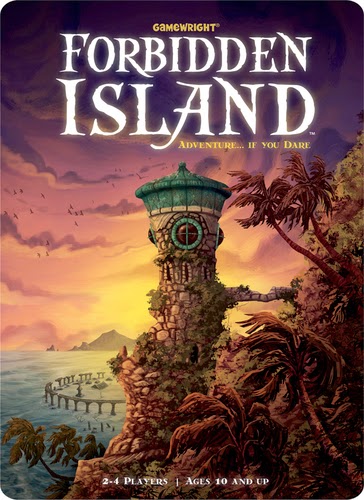
Forbidden Island, $17.99: This one might require some adult guidance, but it’s perhaps one of the best examples of a “cooperative” game (without the more intense, real-world theme of such classics as Pandemic). Players try to retrieve four treasures from an island sinking in to the sea, simulated by location tiles that randomly flood and then disappear entirely. Each has a different role with special advantages, but they all must work together to move around the board, collect resources, shore up flooding tiles, reach the treasures, and escape before the island submerges completely. Forbidden Island’s numerous accolades include the prestigious Mensa Select Award.

Beyond $25

I’d recommend almost any board game beyond the mundane fare one can find at Target or Barnes & Noble. Both chains have become more open-minded about stocking games that cater to the growing sophisticated board game culture characterized by such popular titles as Settlers of Catan, Ticket to Ride, Small World, and Carcassonne. Your Friendly Local Game Store is also a good place to browse possible board game gift ideas, ask the staff and regulars, and special order anything that isn’t in stock.

Why $25?

A few months ago I polled some folks on Google+ to help guide me in where to set the bar on this article. I asked:

What’s the maximum dollar amount you would spend on a non-electronic, game-related holiday gift for a young person between the ages of 5 and 11?

Assume the person is someone to whom you’d usually give a gift at the holiday and that the gift would be in some way related to the adventure gaming hobby, meaning it would expose them to or inspire them to explore roleplaying, card, board, and wargames (of both the board-and-chit and miniature variety). I’m not considering electronic games. Many thanks for sharing your opinions.

The $25 mark easily scored around two-thirds of the responses, with other amounts garnering a few votes here and there...and nobody going for the $100. At least one voter commented on the high cost to buy into games these days, whether a high-end board game, roleplaying game, or certainly a miniatures game. Although $50 or even $100 might buy an experienced gamer an appropriately pleasing gift, to tempt non-gamers or children into the adventure gaming hobby with an expensive gift that may or may not engage their enthusiasm remains a risky proposition.

Whatever your budget, keep games in mind as gifts this holiday season. Support your Friendly Local Game Store and encourage and cultivate a positive community of gamers in your area.

Comments....
Want to share your suggestions for $25 game gift ideas for the non-gamer set? Start a civilized discussion? Share a link to this blog entry on Google+ and tag me (+Peter Schweighofer) to comment.


Tuesday, April 22, 2014

Family Favorites at Awesome Con

This past weekend our family attended Awesome Con in downtown Washington, D.C., a fandom comic-book media event. We had a good time Saturday, despite a few con-management issues; the experience also demonstrated a few elements I thought would make any convention more family friendly.

I try to focus on the positive and avoid the negative in both my online presence as well as real life (to varying degrees of success), so I’ll gloss over the convention management issues that threatened to put a dent into our one-day con experience – lack of entry signage and communication; an hour-long wait to get wristbands for people who bought advanced tickets online; and surly/clueless/oblivious con volunteers wearing shirts emblazoned with “Volunteer: Brute Squad” that seemed subtlety unwelcoming – and focus on convention activities that really impressed us.

Our family had a few ulterior motives for attending the convention. We primarily wanted to see our friend and Star Wars author Timothy Zahn and his wife, whom we haven’t seen for years; although we only chatted with them briefly, Tim and his wife were gracious as always and really made us feel welcomed (something Tim does whenever he meets a fan, even for a quick book signing). I was also interested in meeting Rod and Leanne Hannah, creators of the wonderful Star Wars parody web comic Blue Milk Special; we chatted briefly about a few of their other projects in the works, particularly the kid-oriented Hickory Hippo. And finally our son, the infamous four year-old “Little Guy,” has reached a point where he’s really into superheroes, partly from watching Batman and Wonder Woman reruns on TV and from reading about them at the local library (when those particular picture books aren’t checked out or outright stolen). We hoped to expose him to some generalized fandom, including a huge dose of superheroes.

I rarely attend large conventions anymore, nor comic-oriented events. So I was pleasantly surprised to find some very engaging elements to the convention, some planned by management as part of the con experience, but most reflecting a generous, friendly spirit in con attendees.

NASA & the K-Zone

Aweseome Con set aside an area on the exhibit hall floor as the “K-Zone,” a section with child-friendly activities.

The con volunteers here were the friendliest we met; they welcomed us and pointed out the various tables tempting kids with balloon artistry, Nerf-gun target practice at costumed members of the local 501st Legion organization, a slew of tables with crayons and coloring books, and several hands-on science and craft tables run by NASA.

The NASA tables offered a host of demonstrations and crafts all related to space science. The volunteers here (I’m not sure if they were from the con or NASA itself) really knew their stuff, went out of their way to engage youngsters, and gave away tons of goodies. We wandered up to the static electricity display, where the volunteer talked with the Little Guy, asked him if he wanted to go into space when he grew up, and then demonstrated static electricity with a red balloon and some table salt strewn across the table. A cool demonstration, but more relevant still when she described how the astronauts on the moon brought dust into their spaceship because of static electricity, all while the Little Guy listened with rapt attention. The Little Guy also learned about ultraviolet light and made a bracelet out of light-sensitive beads. But by far the best part was building and launching his own rocket. Volunteers helped him build a rocket out of a taped construction paper tube with a cone at the top and stabilizer fins at the bottom; then he brought it over to the launch zone where kids could put their rockets over one of two “gantries” (plastic tubes affixed to tripods) hooked up to hoses and a plastic bellows...by stepping on, or usually jumping on the bellows, they sent their rockets high into the exhibit hall atmosphere with much gleeful cheering.

We loved the K-Zone, with the Little Guy requesting several return trips throughout the day to launch his rocket. For future cons it might help to have the K-Zone somewhat more insulated location from the loud, pressing crowds of the exhibit hall floor, perhaps one of the meeting rooms used for panels (where apparently they did have programs for kids, though we didn’t notice these on site). I’d also suggest offering a con-exclusive coloring book or page with small packs of crayons kids could take home. Dare I mention that, if located near the equally isolated game room, intrepid organizers might offer demos of appropriate kids games....

R2-DC Builders

While wandering around the exhibit hall floor we happened upon a small crowd watching the comic antics of a life-sized R2-D2 droid, a remote-control creation of the R2-DC Builders, a fan club focusing on constructing actual-sized props from the Star Wars films (though primarily droids). Although the Little Guy was too shy to pose for a photo – he was too shy to take a photo with any costumed character – numerous fans took advantage of the opportunity for a shot with a blinking, beeping R2-D2. Aside from offering photo ops at their booth, the operators frequently took R2 out for a spin around the exhibit hall floor, spreading their excitement and bringing some unexpected wonder into everyone’s con experience.

Complimentary Con-Goers

Maybe I’ve not been to any major conventions in a while, or to any that encouraged costumed participants, but I was very encouraged to find that not only did many con-goers wear costumes, they were extremely encouraging to folks in costume. People stopped for photo ops, offered compliments, and – especially the kids – talked with their favorite comic book personalities in character. The costumes ranged across every license in fandom. Some costumes were simple, others complex, some homemade, others realistically elaborate. Old and young and even infant showed off their diverse costumed finery in a parade that coursed through the long line for pre-paid ticket-holders outside and into the packed exhibit hall.

The Little Guy, dressed in his very simple Han Solo outfit, got a few compliments and “Isn’t he adorable?” comments (and, in true Han Solo fashion, we had to offer him a reward to dress up; yes, I know, we’re terrible geek parents). But now that he’s on a superhero kick, he really enjoyed saying hello to every Batman, Wonder Woman, and Spiderman he passed (though he admired the more intimidating costumes from a distance). Many actively engaged him with high-fives and conversation, though he was a bit too camera shy to pose for photos.

Return Trip?

Will we go to Awesome Con again next year? I’m not sure. It’ll probably depend on whether Timothy Zahn is a guest, how con management resolves some of the issues and suggestions from this year, and where the Little Guy stands in his own superhero and fandom enthusiasms. But from our parental point of view we’re definitely considering bringing him to other conventions of a similar nature. I’ve already brought him to Historicon (as I reported earlier); we’re planning a return trip this year with the entire family for a day. We’re also considering other, smaller conventions which offer a nice assortment of costuming, gaming, and children-specific programming. And thanks to NASA, I’m already plotting in my head how to build our own compressed air gantry-hose-bellows launch set-up so the Little Guy can gleefully send his homemade rockets into the stratosphere.

Comments....

Want to offer feedback? Start a civilized discussion? Share a link to this blog entry on Google+ and tag me (+Peter Schweighofer) to comment.

Tuesday, November 12, 2013

Holiday Gaming with the Kids

As we rapidly descend into the Vortex of Chaos caused by the American holidays (typically including Thanksgiving, Hanukkah/Christmas/Kwanza, and New Year’s), thoughts turn to gatherings with family and friends…and games. I’ve reminisced about games at the holidays before: the sense of fantasy inherent in the season, the gaming-related gifts, the time to play around with one’s hobby, new toys, and friends. As my son nears the four year-old point and the coming holiday season, I started thinking about gaming with kids. HistSWGame


By “kids,” I mean preschoolers in the three- to four-year-old range, possibly as old as five or six. Some of these insights might help parents introduce older “kids” to the adventure gaming hobby, but by those ages they’re reasonably bright enough to know what engages them and thus dive into anything (like gaming) with the possibility of challenging fun (and opportunities to best their parents). I’m limiting my own discussion to board games, since, at this young age, the only roleplaying activities I expect them to show any interest for remain creative play options with toys, even if those toys are PlaySkool Star Wars figures, Disney’s Cars toys, and other normal-play fare.

Gaming with kids presents a wonderful opportunity for family time together, not simply sitting around basking in the feel-good glow of the holidays, but interacting in positive ways that can have lasting effects on behavior. We’ve established a weekly “family game night” with our Little Guy, trying some of the fare listed below; he looks forward to it every week and seems open to trying new, appropriate games. Whether he’s really understanding the games at this age, we’re still making important gains:

* We’re spending family time together without the constant distraction of electronic devices.

* He’s reinforcing lessons from preschool: following instructions, identifying numbers, letters, and abstract gaming symbols (okay, he’s not learning that last one at preschool…), realizing his actions have results and influence other people’s actions.

* He’s learning some basic gamer etiquette, such as being careful with food or drink around games, following game instructions, taking turns, re-rolling dice that tumble off the table, respecting game components, and generally learning to take advances and setbacks, victories and defeats in stride (or at least without tantrums).

My general tips for gaming with youngsters usually fall back on gentle, encouraging parenting. Some games require simplification of rules. Some require an adult to offer a good deal of assistance simply to get through a turn, though our experience has shown kids quickly learn for themselves and eventually refuse offers of help. Use games as “teaching moments” to learn numbers and letters, right and left, turn-taking, and good behavior. As adults we join games as regular players; while we sometimes give the Little Guy an advantage (playing the Millennium Falcon in the X-Wing Miniatures Game, for instance), we don’t usually hold back during games to let him win outright…he has to work for it.

Games We’ve Tried

While I have visions of my son several years from now sitting down to face his father over such games as Memoir ’44, Ticket to Ride, Smallworld, Sirocco, Axis & Allies, Carcassonne, and Ra -- not to mention the possibilities roleplaying games offer -- I realize he’s capable of only limited game challenges right now, as are most kids in the three and four year-old ranges. We’ve tried a number of games with the Little One over the course of many family game nights and a few games on weekends or with friends…and most have proved successful:

Dino Hunt Dice: This affordable, fun little game from Steve Jackson Games lets kids enjoy rolling dice and then identifying the three kinds of dinosaurs, the leaf result (dinos hiding), and the stomp result (dino hunters stomped!). Kids love dinosaurs and the game theme of hunting them tricks them into learning to identify the symbols, count their captures or stomps, and decide whether to continue and press their luck. It’s a much more thematically acceptable alternative to the game’s cousin, Zombie Dice (I’ve discussed our experience with Dino Hunt Dice in greater depth before).

Star Wars: X-Wing Miniatures Game: After seeing it played at a convention, the Little Guy wanted to play it himself. He’s seen enough Star Wars toys around the house -- and finally saw Episode IV A New Hope (it’s just good parenting) -- so he knows most of the major characters, locations, and plot points. We bought the starter set and a few (okay, more than a few) extra ships, including the Millennium Falcon, which is “his” (it also helps that it has a 360-degree field of fire, unlike other fighters that have to maneuver to line up shots). The extremely basic quick-start rules included in the game provide a practical set of rules he can follow while still keeping the adults interested. We’re hoping we’ll eventually graduate to the regular rules to enjoy more of the game’s complexities, but we occasionally work in some advanced rules, particularly those related to asteroids (though we’ve played with a basic, programmed Imperial shuttle intercept scenario, too).

King of Tokyo: The Little Guy inherited his mother’s love of kaiju movies, so this game -- with its push-your-luck dice mechanic, monster stand-ups, and power cards -- seemed a good one to test the bounds. Initially he needed some guidance in determining what he wanted to do with his dice and getting through the turn sequence, but he quickly caught on and rejected all assistance. Heck, he won the first two games we ever played! Although it’s not always apparent he’s actually using a strategy, he enjoys rolling gobs of oversized dice and collecting enough energy cubes to buy monster power cards with cool illustrations (again, without really exhibiting any strategy beyond the exciting appearance of the pictures). His favorite monster? Cyber Bunny.

Pizza Party: I found this in a local teacher store and thought the Little Guy might find it interesting, especially considering I make homemade pizza once a week, a ritual with which he often helps. It’s less a game and more an exercise in matching dice-rolled toppings to pizza cards; but it still keeps the Little Guy engaged and hones his skills at matching symbols (and rolling dice). I’ve modified it to focus solely on him rolling dice, identifying the symbols, and matching them to slices. I have some doubts about the game -- shrimp and sardines figure prominently as toppings, while olives and onions were not included -- but, using a similar competitive mechanic as Roll for It (see below), it might have more promise.

Star Wars: Escape from Death Star: The Little Guy saw Kenner’s classic board game high on a shelf in my office -- a relic of my earliest days of board gaming and sci-fi fandom -- and insisted we try it. The cardboard stand-up pieces have seen better days, the spinner often landed on a line between numbers, and the cards seemed quite arbitrary, but we all had fun bumbling around the Death Star trying to get the plans and shut off the tractor beam before escaping to the Rebel Base. I recall frequently playing it with family and friends in my youth, the first manifestation of my love for Star Wars. The Little Guy took to it easily, though he had some trouble navigating the board.

Games I’d Like To Try

Several games wait in the wings to try with the Little Guy. Some we’re just waiting for an opportunity to introduce, others we hope can push his bounds a bit further when he’s ready:

Wings of Glory: The forerunner of the Star Wars: X-Wing Miniatures Game engages my interest in World War I and II and has miniatures that capture the Little Guy’s eye. The one item he insisted I buy for him at a convention was a “cow bomber,” the Heinkel 111 plane for Wings of Glory WWII in arctic camouflage, white with dark green blotches, looking somewhat like a holstein cow’s coloration. The game’s use of cards for movement and maneuvers seems more intuitive and less complex than the full X-Wing Miniatures Game. Should we try this I’ll streamline the rules and simply have each participant reveal a maneuver card simultaneously (using only the slow maneuvers in the WWII version) before resolving shots and damage instead of plotting out two or three cards at a time. The Little Guy has requested we play “Daddy’s airplane game” sometime, so this remains high on our list.

Dungeon!: Wizards of the Coast/Hasbro re-released this classic fantasy board game with new artwork and components, and my parents -- who’ve nurtured my interest in sci-fi/fantasy and adventure gaming from the start -- got it for my birthday. It seems fairly straightforward as heroes explore the dungeon, defeat monsters, and take their treasure. The rules offer a very basic gameplay, though I’d expect adults might have to guide youngsters through the more involved procedures like traps and spells. While the board artwork seems impressive, I’m not sure it clearly indicates corridors and spaces well enough for a three year-old to navigate during gameplay. Many of the numerous components are quite small, including the illustrations, which normally remain key in captivating a kid’s interest. We’ll see if the box, board, and card artwork tempt him enough to at least start a game.

Roll for It: A copy of this recently arrived in the post as a backer reward from the game’s Kickstarter campaign. Players roll dice and match them to cards showing different combinations of results. Match all the die faces and take the card to score. The basic gameplay allows multiple players -- each with six dice of the same color -- and offers a nice balance of random die results, resource management, and press-your-luck. The Little Guy likes his dice and makes a great show of rolling them, so this one’s high on my list of new games to try.

Whatever the age of your kids, we encourage you to shut off the television, turn off the tablets and phones, and sit around the table this holiday season to enjoy some face-to-face gaming and make some fond family memories.

Comments....
Want to offer feedback? Start a civilized discussion? Share a link to this blog entry on Google+ and tag me (+Peter Schweighofer) to comment.

Tuesday, April 16, 2013

How Dino Hunt Dice Saved Me from Zombies

Steve Jackson Games’ Dino Hunt Dice helped me divert my toddler son from his unexpected interest in Daddy’s Zombie Dice game.

A few weeks ago, as we prepared to have some friends over for food and casual gaming, I had a small selection of appropriate games out on the coffee table, including Tsuro, Forbidden Island, and Zombie Dice (three I’ve recommended before as “innovative party games” suitable for people who aren’t hard-core gamers). Unfortunately the Zombie Dice somehow came out of the canister, toddler started rolling them, and stupid Daddy explained what each symbol was: brains, footprints, and shotgun blast. Our toddler’s at an age where he picks things up like a sponge, recapping what he sees on his PBS Kids television programs, fixating on toys or games he finds in my office, talking about excursions in great detail days later, repeating words and phrases he hears from others (usually the ones we don’t want him to repeat...). Of course, of all the Zombie Dice symbols, the one that elicited a delighted-toddler scream each time it came  up was “shotgun blast!” This did not delight Mommy, and Daddy instantly felt like he was (quite deservedly) in the doghouse. 

On a subsequent visit to my friendly local game store I happened to spot Steve Jackson Games’ Dino Hunt Dice hanging on a display near Zombie Dice and other dicey versions of board games. I hesitated. The dice displayed looked cool, with prehistoric leaves, three different dinos (apatosaurus, triceratops, and tyrannosaurus rex, of course), and three corresponding “stomp” footprints. I already owned Zombie Dice and the sales blurb on the Dino Hunt Dice packaging showed it was exactly the same gameplay but with dinosaurs. Then I realized what I just thought, that phrase that meant the game wasn’t really for me, but for my toddler: “with dinosaurs!”

The $9.99 price point was a no brainer for a simple dice game featuring dinosaurs for my toddler; but the friendly local game store’s seemingly endless 20% off all board games sale lowered the price and made me an extremely happy customer. I brought the game home and reveled in my toddler’s glee when he realized Daddy found and purchased a dinosaur game just for him. We gathered around the coffee table to read over the rules, grabbed a piece of scrap paper and a crayon for scorekeeping, and started playing. Our toddler wasn’t satisfied with having just Mommy and Daddy for fellow players; he felt the need to fetch his plush buddy Alpaca and include him in the game as well (and thus taking an additional turn himself rolling for his cuddly buddy). We made one modification to the rules for toddler play: instead of capturing 20 dinosaurs to win, we reduced the victory conditions to 10 to allow for the slower pace of a game with someone still learning to count and take turns (both on his and Alpaca’s turns).

Overall everyone enjoyed the game. Mommy and Daddy had fun with the push-your-luck mechanic, while the toddler focused more on his turn-taking and counting skills. He quickly grasped the concepts behind each image turning up on the dice: with our encouragement he didn’t realize the “stomp” result meant one of his dino hunters got crushed, more that the dinosaur “ran away” for good instead of hiding in the lush underbrush of the “leaf” result. Besides, a toddler shouting “stomp!” doesn’t raise disapproving eyebrows as much as shouting “shotgun blast!”

I vaguely recall playing a demo version of the original Dino Hunt game years ago at GenCon or the GAMA Trade Show when I was more active in the industry as an editor at West End Games (I’d like to say I still have the demo giveaway materials stashed somewhere…). According to the company website the original game and its supplements remain out of print; while that game had good dino-themed play value (by my foggy recollection), Dino Hunt Dice distills the essence of the original game into a quick, push-your-luck game experience suitable for supervised play with three year-olds. I recommend “supervised play” for two reasons: the game warning indicates that, since it contains small parts (dice), it isn’t intended for kids ages 0-3; even a bright three year-old isn’t going to get much play value out of it other than rolling colorful dice and identifying the symbols.

We enjoyed our actual play experience. It allowed our toddler to play one of Daddy’s games; gave him a chance to handle and roll the dice; and provided us an opportunity to practice counting dice, identifying results, and taking turns. After all that dice rolling, result counting, and dino captures, who ultimately won? Why, Alpaca, of course!

Comments....
Want to offer feedback? Start a civilized discussion? Share a link to this blog entry on Google+ and tag me (+Peter Schweighofer) to comment.

Tuesday, April 2, 2013

One Year Later: Reading The Hobbit at Bedtime

Last year around this time I began reading The Hobbit to my then two year-old son as part of his bedtime reading routine. Mommy reads a few short children’s books while he sits in bed, then he puts his head on the pillow, cuddles with some of his plush buddies, and (sometimes reluctantly) closes his eyes to listen. The ritual usually includes him asking to see one of the fantastic Alan Lee paintings in my wonderful illustrated edition of the book. Hobbit Illust

Since starting this tradition in April 2012 we have read it four times through, and now we’re well into a fifth reading. I tried reading several other books that might lull him to sleep, including undiluted Grimm’s Fairy Tales (in which truly horrid things happen, especially to kids), but they didn’t possess the wondrous enchantment of The Hobbit or Tolkien’s melodious, often rambling writing style. Though I might try some children’s versions of Greek mythology or Aesop’s fables next time around, there’s something about Daddy reading The Hobbit that appeals to both of us. The fact that it’s viewed as Daddy’s special book to read feeds my inner geek dad; I certainly find satisfaction that it may be the first of many shared geeky interests to come.

During the course of our one-year, four-reading journey through The Hobbit I’ve gained a greater understanding of the literature and myself. Gandalf’s sometimes doddering, sometimes gentle authoritarian manner has grown on me, and I find comfort in it that Bilbo and the dwarves must have felt in his presence. I don’t much care for the Mirkwood passage, possibly feeling the dwarves’ tedium at the dark, airless atmosphere and the revulsion at the spiders and their wicked intentions. Smaug remains brilliantly evil, a true scenery-chewer, and insidious in his efforts to turn Bilbo against the dwarves by playing on greedy stereotypes. Throughout the book I more thoroughly enjoy Tolkien’s often rambling, conversational storytelling style, something I’m ruefully noticing has always crept into my own writing style since I first read the book as a boy.

Part of the fun comes from “performing” the reading. Though I don’t have individual voices for all 13 dwarves, I have voices for key characters: Bilbo’s higher, sing-song voice; Gandalf’s melodious bass and casual tempo; Thorin’s almost monotone, gruff bass; Bard’s grim baritone; Smaug’s snake-like, almost sneering voice. Gollum, of course, follows the patterns voiced by Andy Serkis in the Lord of the Rings films, at least when I’m in the mood. I’ve also learned to vary my tone and inflection to represent other character voices, such as the Elvenking’s high nasal condescending tone. Since it’s bedtime reading, I start at a fairly casual pace and take my time, lowering my voice -- sometimes even to a whisper -- should the reading go longer than 10 minutes or so, to further induce sleep from a sometimes fidgety toddler.

I did not take my toddler to see Peter Jackson’s The Hobbit: An Unexpected Journey, though I saw it twice in theaters and enjoyed it immensely as something quite different from the book. (My son might see the films when he’s old enough, though if I ever find a working VCR in the house, or find it on DVD, the Rankin/Bass animated version might be more his speed.) Despite the movie’s departure from the literature on various levels, the soundtrack captured much of the magic and mystery of Middle-earth, particularly the dwarves’ Misty Mountains song, the tune of which I’ve memorized and now sing softly when encountering the lyrics while reading The Hobbit at bedtime. In reading the book aloud I’ve found the songs remain the most difficult to parse from the printed text to spoken voice; I wish the film offered tunes for the other major verses in the novel, particularly the songs of the Rivendell elves and the goblin chants (“Down to Goblintown” and “Fifteen Birds in Five Fir Trees”).

Has reading The Hobbit kindled any interest in related geek activities for my toddler son? That’s not easy to discern. He knows Gandalf is a wizard, Smaug is a dragon, and Bilbo is a hobbit. He likes the immense, plush red dragon hanging from the ceiling of the local library’s children’s section. I’ve brought him to the friendly local game store enough times that he’s declared he wants to play games with Daddy, and we’ve engaged in some very simple games (such as a Dinosaur Train-themed chutes and ladders reskin and Steve Jackson Games’ Dino Hunt Dice…more on that in a later post); but, as I patiently explain to him, he needs to master the skills of counting and taking turns before he tries anything but the simplest of games (and he’s working on those with adequate progress).

But I see all that as part of his broad introduction to the host of subjects that interest most kids, among them dinosaurs, wild animals, aircraft, and trains (the last two being interests of his father and a pilot uncle). Bedtime reading remains only a small portion of his day filled with way too much PBS Kids television programming, library story times, programs at the local history museum, trips to the park and playground, and more toys, Hot Wheels cars, blocks, and Legos than I care to clean up….

Comments....
Want to offer feedback? Start a civilized discussion? Share a link to this blog entry on Google+ and tag me (+Peter Schweighofer) to comment.

Tuesday, July 3, 2012

Summer Re-Reading

Summertime brings the local public library’s inevitable Summer Reading program, with logbooks and prizes and entertaining programs for the younger ones…all intended to foster some sense that recreational reading has a place in our lives no matter our age. Many who fall into the category of adventure gamers have a love of reading that transcends incentive-based programs flogging kids to read for prizes. It reminds me of books I consider relevant classics of science fiction and fantasy that I haul out every other year or so and re-read like comfort food for the mind.

The Library of Congress recently released its list of “Books that Shaped America.” I didn’t expect to find many titles from the science fiction and fantasy genres, so I was pleasantly surprised to see two classic science fiction novels among all the fiction and non-fiction: Ray Bradbury’s Fahrenheit 451 and Robert E. Heinlein’s Stranger in a Strange Land.

One of those titles resides on my own very short list of novels I read over again periodically. Many people have favorite books they re-read now and then, in part because they offer enjoyment and because something within those tomes speaks to the frequent reader and appeals to their own character. When the Lord of the Rings films released, I recall Christopher Lee saying how he read the trilogy every year; since then I’ve noticed various other personalities have noted significant books they re-read.

I certainly don’t have time to read these once every year, but frequently enough over the years that they’ve influenced me in various ways.

The Hobbit

I discovered the J.R.R. Tolkien classic around the time the Rankin/Bass cartoon aired on television, and well before I read the thick, intimidating tomes of Lord of the Rings. With none of the overwhelming weight of the trilogy’s themes and language, The Hobbit still embodies for me qualities of the quintessential fantasy story: quest for treasure, the contented hero leaving home for unknown adventure, and a host of elves, dwarves, a wizard and a dragon. It’s written for children, though certainly in a narrative style better read aloud than to oneself (as I’m discovering slowly reading it to my toddler). On the surface it’s an enchanting fantasy story with all the expected trappings, perhaps one defining the genre like no other since Grimms Fairy Tales. On a deeper level it illustrates -- sometimes very blatantly -- how stereotypes can change (that of “burglar” and “thief” to hero), how greed, entitlement, and stubbornness lead to strife and tragedy, and how one can overcome self-doubt and temerity to rise to the occasion when the time comes. The Hobbit remains an enjoyable read that inspires the very roots of my interest in fantasy gaming.

Stranger in Strange Land

I first read Heinlein’s classic way back my senior year in high school, when I took what many considered a semester-long “fluff” English course in science fiction. For me it wasn’t “fluff” since I was already heavily immersed in science fiction novels (and gaming) and had ambitious plans to write for the genre myself (though little did I suspect those publishing endeavors wouldn’t be in novels but roleplaying games). Whether one reads it as provocative examination of human nature, society, and spirituality or simple satire on life, love, and religion, it pushes readers to think and react to themes brought to life by rich and diverse characters, many of whom politely demand our compassion and respect: what is the divine, how far do we go in standing up to the establishment, how does religion shape society, is humanity on the right path? Each time I read it something new comes to the forefront, whether the concept of divinity in all (“Thou art god.”) to the ancient Martians lurking in the background, wondering whether humanity remains worthy of existence (and humans wondering if they’re really wondering that and capable of acting on it). Reading it becomes an exercise in challenging my accepted perceptions of authority, the norm, and belief.

A Canticle for Leibowitz

Unlike Heinlein, Walter M. Miller, Jr., published only one novel in his lifetime, A Canticle for Leibowitz. I recall reading it the summer before my senior year in high school, when I tore through mass market paperbacks of science fiction and fantasy from a local bookstore whose owner made sure he stocked all the books of series or authors in whom I took interest (primarily Larry Niven and Michael Moorcock). I picked up Leibowitz for the post-apocalyptic setting; back then I lived in the waning years of the Cold War, where television movies like “The Day After” and other nuclear-war-themed post-apocalyptic fare filled the media with images of missiles raining atomic death into the lives of ordinary people. The book conveys a sometimes overwhelming pathos that, no matter what we learn from our past, we always seemed doomed to repeat it, if only with a few contextual deviations. Throughout the novel readers keep seeking hope that, maybe this time, humans can set aside their vices and selfishness and move toward something greater, the improvement and future survival of humanity; but ultimately it paints a bleak picture that humanity can’t, and won’t, change from its self-destructive tendencies, that even the influence of religious institutions cannot sway humanity from that course, though it might help in smaller ways.

Right now I’m busy reading my beautiful, illustrated edition of The Hobbit to my toddler in bits and pieces as his patience allows. Once his tolerance evaporates, it’s back to reading more toddler fare to reach our 20-book goal so the Little Guy can earn some cute prize from the Summer Reading Program….