Showing posts with label family games. Show all posts

Tuesday, October 20, 2020

Games for Learning

 Reinforce Lessons, Inspire Curiosity

Do not…keep children to their studies by compulsion but by play.”

Plato

The apparent drudgery of schoolwork – even online as a result of America’s hellscape response to the covid-19 pandemic – reminds me of the important role games play in learning...one often overlooked in the official academic bureaucracy of standards of learning, state-endorsed policies, and administrative procedures. Our full-time online distance learning school year began toward the end of August; already the lament of “Why do I need to learn this?” has begun. As dad I get to supervise academic activity and enforce schedules, deadlines, and long-term projects, sort of an unpaid proxy teacher’s aid. It took about three weeks for the lessons to ramp up to something approximating full-steam, with two or three online class meets per day, a host of online exercises and resources (some game-like), and lots of prodding to stay on target academically within the lax environment of one’s own home. This year’s teacher impressed us with his ability to port his live classroom experience to an online format; though we regret our son can’t really enjoy this first-hand in a traditional classroom environment. Nonetheless I still wish schools integrated more games for learning to reinforce lessons and inspire curiosity beyond the bounds of even a virtual classroom.

Tuesday, October 6, 2020

Games for Learning: Sol O.P. Grand Prix

I’ve long been an advocate of introducing the adventure gaming hobby to kids and newcomers. I feel strongly that games can enrich our lives beyond their basic entertainment value. For a while I’ve hoped to engage with kids and educators about enhancing learning, reinforcing lessons, and encouraging a sense of curiosity through games. I’ve tried a few times to create games suitable for younger players: Panzer Kids, Valley of the Ape, even the solitaire Lord of the Two Lands. So when I realized my son needed help with his multiplication tables, I started thinking how I might turn a learning experience into a game. (I hated multiplication tables when I was in elementary school and it started a lifelong dislike of math.) But when the pandemic hit everything was canceled during America’s subsequent hellscape response. Including school. So my son’s teacher never had a chance to solidify his multiplication and math skills, teach much about Virginia in the American Civil War, or cover the solar system so kids could do the obligatory project for the canceled science fair. With the new year starting we’re facing more than challenges from full-time distance learning online...we’re dealing with having lost an entire quarter of his previous year’s learning, further diluted with a tedious summer without many of the usual summertime diversions. So I designed a game to help with math.

Tuesday, September 15, 2020

Same Great Experience, Smaller Package

The board game world offers some amazing experiences, but the prospect of learning a booklet of new rules and spending several hours immersing themselves in an hours-long game can discourage some newcomers from pursuing the hobby...and even longtime gamers don’t always have the patience or time to invest in comprehending and playing a new game. As an advocate of introducing gaming to newcomers and kids, I’m always looking for games that don’t seem too overwhelming or complex, yet still offer a satisfying play experience. So I was happy to discover a few titles one might consider lighter, younger siblings of well-established games – Ticket to Ride: New York and Pandemic: Hot Zone – North Americawhich provide similar themes and gameplay as the originals without taking several hours to learn and play.

Tuesday, July 28, 2020

Our Family Plays Games

I’ve returned from my meditations at the Hermitage at the Edge of Oblivion having had some time to relax, reflect, and re-focus, though not as deeply as I would have liked. I haven’t managed to deal with the events and feelings that sent me packing to the Hermitage in the first place; but I don’t think any amount of meditation can or even should resolve those feelings. I have taken some solace, however, in games, books, history, media, and other distractions. A friend pointed me to the Our Family Plays Games channel on YouTube, a fulfilling combination of games and media. While I haven’t watched as many episodes as I would like, I realize it’s a welcome invitation to explore today’s numerous board games from a more diverse perspective.

Tuesday, May 23, 2017

Summertime Gaming Can Reinforce Lessons

Today’s the last day of school on the medieval frontier of Northern Virginia...the medieval side. (Alas, our school board thinks starting school the second week of August, putting the first term SOL testing right before the December holiday break, will increase SOL scores instead of focusing on paying teachers decently and letting them teach instead of handle bureaucracy....) Already last week summertime recommendations started coming home: a list of recommended “series” books for summer reading, a 22-page handout with math problems to solve, a list of educational websites to visit, a page of “dice games” that are really just math exercises with dice, and a thick, door-stop-sized reading/writing workbook someone ordered but apparently didn’t use all school year. All this comes slathered in the repulsive stigma of homework, something the seven year-old Little Guy has grown to dislike and resist throughout the school year, more so in these final weeks before summer vacation. So what’s a parent to do? I’m turning to two things we know and enjoy: fun themes and games.

The Little Guy – and most elementary school kids, I suspect – maintains a host of interest in various media properties: Minecraft, Transformers, Pokemon, Star Wars (particularly Clone Wars), Godzilla, Doctor Who. Interest in them waxes and wanes, but they sometimes help him engage in educational activities disguised as fun. (I’ve blathered on about themes in games before in “Introducing Newcomers to Games: Theme & Mechanics.”) Just the other weekend we caught him sitting in bed reading a Star Wars book aloud to our cats (granted, they like hanging out in his comfy bed anyway, but apparently reading was a bonus). We’re embarking on a first-edition Star Wars Roleplaying Game campaign at his insistence; so far he’s enjoyed accurately adding up the results of numerous d6 rolls, especially when tossing handfuls of dice when using a Force Point. He reads all the powers and attacks on the cards when we play the Pokemon collectible card game.


Tuesday, October 25, 2016

Leacock Brings Chariot Race to Tabletop

I’ve been reigning in my spending on Kickstarter projects the past year or so. I’m supporting only the really outstanding roleplaying books or board games: those that cater to my interests with mechanics suitable for my young son yet intuitive and innovative enough for me, all at the right price. So I was pleasantly surprised to learn of Matt Leacock’s Chariot Race, even more so after I looked at the Kickstarter page and read the rules posted there. The game distills elements of a classic theme I enjoy and mixes them with some innovative mechanics for an exciting yet “casual” chariot racing board game.

I say “casual” in that it’s not serious fare like the classic Avalon Hill title Circus Maximus, which infused the ancient chariot racing theme with wargame-complexity rules. I don’t own a copy of that venerable game, but we’ve played it before at the friendly, regional game conventions in Williamsburg, VA. Someone usually brings their immense, 25mm-scale game mat, architectural embellishments, and detailed chariot models; each player gets a laminated sheet for chariot, horse, and charioteer stats, with a dry-erase marker to note stats and changes during the game. The Little Guy joined a game earlier this year and though he was a bit timid in his racing tactics, he seemed to enjoy the spectacle, especially when chariots overturned and crashed. Ancient history remains one of my many interests, so Circus Maximus intrigued me. Yet the complexity of the rules – even those probably simplified for more streamlined convention play with a knowledgeable referee – left me yearning for something more accessible. Certainly the spectacle of a huge 25mm-scale set-up at the convention impressed me, but I didn’t have the patience to track down an out-of-print wargame and then immerse myself in its intricate rules...or try to teach them to an easily distracted six year-old.


Tuesday, October 4, 2016

Minecraft Card Game? Ideal for Families

We recently bought the Minecraft Card Game? for our son, the six year-old “Little Guy,” because he’s immersed himself in the Minecraft universe. I don’t pretend to know much about Minecraft; I’ve accepted it as one of those fads I’m aware of yet encourage my son to explore. At his insistence I bought Minecraft for his tablet and many of his first-grade friends are into it, so it’s his “thing” now (having set aside Star Wars, Doctor Who, and Godzilla for the time being). So he now wants any associated Minecraft toys and, when he saw it, the card game. I was skeptical at first, thinking I was just pandering to his fad de-jour, but upon playing it several times with our family, discovered the Minecraft Card Game? did a nice job of merging an interesting theme with easy yet engaging mechanics.


Tuesday, September 20, 2016

Thoughts on Playing Hero Kids

The Little Guy finally pestered me into running a roleplaying game for him the other night. He’s six-and-a-half years old, doing well in first grade, and has already sampled other games from Daddy’s varied adventure gaming hobbies, including miniature wargames and board games. I’ve had Hero Kids waiting in the wings for a few years, yet I just haven’t felt like the Little Guy was ready for something a bit more free-form than some of our other gaming fare. I ordered a print copy of the rulebook and printed out character cards, stand-up figures, and the Basement O Rats scenario back in August in case we had free time at a convention to run it; we didn’t, but it meant I was somewhat prepared when the Little Guy quite suddenly insisted we play it after dinner one night.

So Dad sat down with the Little Guy; Mom was a good sport and agreed to play so we wouldn’t have an awkwardly solitaire game session and to demonstrate the idea of an adventuring party helping each other overcome challenges. They chose characters from those I’d printed to cardstock. I took about 20 minutes to outline the various elements of their characters and answer questions, then we dove into the game. I ran the Basement O Rats scenario complete with printed map boards and cardstock character and monster stand-up figures. Using the recommended number of adversaries for two players (a helpful, balancing innovation) they explored the caves beneath the tavern, vanquished the rats, and rescued Roger, all within about 45 minutes (including a few quick asides to look up and clarify minor rules questions). The Little Guy enjoyed it so much he wanted me to run another scenario immediately....

I examined Hero Kids when I first got it and, from a basic reading, was impressed with the resources it offered: intuitive mechanics using six-sided dice; clear character sheets; lots of advice for running a roleplaying game for kids (or even newcomers); a setting focusing on the role of kids rather than typical fantasy heroes; and map “boards” and pieces for scenarios to help transition from more traditional games. After actually playing it, I realized most of my earlier impressions were spot-on, though, of course, actual play reveals some nuances:

Duration: Kids have limited attention spans, especially in this age of instant gratification from electronic devices. The concepts and mechanics behind Hero Kids took only a few minutes to introduce to new players, while the scenario itself ran in less than an hour. This was the perfect length of time to maintain interest while still offering a significant taste of the game play. Occasionally the Little Guy’s attention wandered off a little, but it was more a lack of patience with other players’ turns and the presence of natural distractions such as errant toys at the dinner table that tempted him.

Party Teamwork: The Little Guy played a warrior while Mom ran a healer; the combination, and their coordination during combat, helped illustrate how different party members could contribute to success. At times the Little Guy wanted to go off on his own, deny assistance to his Mom’s character, or even attack her (“Can I attack other players’ characters?” he asked...something I expect every gamer asks at some point). At each turn we gently demonstrated how party members depended on each other – offering coordinate attacks or healing each other at key moments – or how, sometimes, his own insistence didn’t matter, such as when his warrior scaled a wall with the healer’s help, then he didn’t offer the healer assistance...not that she needed it with a successful skill roll.

Skill Tests: I really liked the die pool system, especially for non-combat skill tests. In a fight players roll the appropriate die pool and compare the highest result against the opponent’s roll; for skills they compare a roll against a difficulty number (4, 5, or 6) for success. Each combat skill (melee, ranged, and magic) also serves as a skill (strength, dexterity, magic), and each player also gets a few non-combat skills like tracking or lore. Although the scenario depended on lots of combat, it also offered some purely skill-based challenges, like climbing a cave wall or figuring out which tunnel led to the rats. It offered a nice balance between hack-and-slash and problem solving.

Lack of Character Advancement: The Hero Kids rules don’t offer any mechanics for character advancement, though it’s easy enough to allow each player to assign an extra die to their character after several hard-won adventures. Yet the lack of an advancement system removes the emphasis on killing monsters and taking their treasure for personal gain and instead focuses on fulfilling the story elements. Rather than delving into the tavern basement seeking hoarded rat treasure, the heroes explore the tunnels and vanquish rats with the goal of rescuing their friend. While it might seem good to offer some motivation in the form of personal advancement (gold, experience points), it’s refreshing not to place emphasis on greed and killing.

Maps and Pieces: I’m undecided about using the maps and cardboard stand-up figures. They’re useful for transitioning players from traditional boards and pieces to a roleplaying game setting. They’re absolutely necessary for introductory Hero Kids games. They help everyone visualize what the environment looks like, where heroes and adversaries stand, and how everyone moves relative to other elements. Yet the reliance on physical components hinders the gamemaster’s ability to simply whip up a new scenario on the spot (at least without having a stock of ready-made maps and cardstock figures), as demonstrated by the Little Guy’s insistence I run another session right away. I started mentally fumbling around for ideas, all of which required me to look up some potential adversaries, jot down some scenario notes, draft gridded maps on a large enough scale to use figures, and then find or print said figures. I think for at least the next few game sessions I’ll have to either devise my own maps and use figures I have or rely on printing materials from the Hero Kids scenarios I have in PDF. That said, the game could easily transition to a more freeform system, even one with a purely verbal description.

When the Little Guy expressed an urge for me to run more Hero Kids, he demonstrated that he doesn’t quite understand the amount of preparation that goes into running a scenario. His tastes tend to run toward whatever electronic media he’s devouring at the moment. He’s looked at Daddy’s Basic Dungeons & Dragons rulebook but really wanted to try the Hercules & Xena game he spotted. He’s asked me to run a Star Wars roleplaying game session, though he prefers the prequels to Daddy’s cherished original trilogy. I think we’ll do more Hero Kids before we decide what direction to take next. He’ll be seven years old soon, a good age to continue our exploration of adventure gaming and expand it with some roleplaying game scenarios.


Comments....
Want to share your opinion? Start a civilized discussion? Share a link to this blog entry on Google+ and tag me (+Peter Schweighofer) to comment.


Tuesday, March 15, 2016

Star Wars Duels Redefines “War” Card Game

I recently picked up Star Wars Duels, a card game from Hasbro with an obviously popular theme, at the behest of the six year-old Little Guy, who saw it on sale at our grocery store and immediately wanted it to try for our weekly family game night. I’m not a huge fan of card games, though we have a number we enjoy because they’re right at the Little Guy’s level and work with engaging themes (particularly Godzilla Stomp and Otters). Star Wars Duels pleasantly fits into that category, combining modified “War” gameplay with colorful images of Star Wars characters kids love.

The 54-card deck comes with a rules flyer and a reference card for some of the symbols used in the game. They’re standard playing card-sized cards, though given the box size and the intended audience I somewhat expected slightly larger, more kid-friendly cards. Each card comes with a blue, red, or yellow border for the heroes, villains, and neutrals (mostly creatures); a full-color photograph of the character; their name; a card value from 1 to 10; and one or two symbols related to the character’s affiliation. The heroes and villains each have 23 cards, with 8 yellow cards devoted to neutrals. Card values seem a bit inconsistent, but vary from a standard playing card deck spread: 8 to 9 cards of the lower values (1–3); 4 to 7 cards of the middle values ( 4–6); and 3 to 4 cards of the highest values (7–10).


Tuesday, February 16, 2016

Grown-Up Games & Kids at Play

A game is a form of play with goals and structure.”


As a gamer parent I encourage my son to join in my games. I’ll freely admit my enthusiasm sometimes gets the better of me, that I don’t always have realistic expectations, and that – like some parents do with sports, careers, or other interests – I gently force my own expectations on my son against his childlike wishes. Kevin Maroney’s basic definition of a game outlines a balancing act gamer parents face. Kids naturally want to play freely, but are they ready for the structure of a game, especially the more daunting structure of a game their parents enjoy?

Frequent readers know I introduced my son, the now-six year-old Little Guy, to games at an early age. He’s always been interested in Daddy’s toys despite the heaps of his own toys spread in the living room and his bedroom. Like most kids his age he enjoys going beyond the bounds with his toys, not simply playing with them as intended but crossing genres and making up his own entertainment unhindered by rules or restrictions. He’s exhibited very imaginative play tendencies, both on his own as an only child and with his parents and friends. He plays out adventures (“movies” or “episodes”) with his Godzilla, Doctor Who, and Star Wars toys, often mixing them up and substituting other toys for missing characters. With his introduction to more formalized games we started small and worked our way up from kid-level fare like Dino Hunt Dice to more sophisticated fare. We’ve rarely turned to children’s board games like Candyland that rely on random mechanics and severely limit player choice (though the completely random Destroy Death Star game proved – and continues to prove – a delightful diversion despite its total lack of player choices). He’s grown over time as we’ve explored new games, particularly ones that merge mechanics he can grasp with themes he loves.


Tuesday, January 5, 2016

A Bounty of Holiday Gaming Gifts

Throughout my life the December holidays have always provided a host of gaming gifts. Even as a child, before discovering the rich potential of the adventure gaming hobby, we always received some board game or other (as I was reminded by the piles of old game boxes my parents cleaned out of their attic and brought during a recent visit). This year my family was very generous and creative in making it a game-filled holiday.

This year's bounty of holiday gaming goodness.
I fondly recall several holiday presents in my gaming collection from Christmas past. The first year I was into Dungeons & Dragons my brother went down to our local gaming store, the long lost Branchville Hobby, and bought me a Grenadier Wizards Room miniatures boxed set and module A4 In the Dungeons of the Slave Lords (even though I only had A1 Slave Pits of the Undercity and A2 Secret of the Slavers Stockade...). A great aunt got me Avalon Hill’s Kingmaker (no doubt with some guidance from my parents) to set me on my path toward wargames. More recently my well-advised in-laws sent me the Star Trek: Attack Wing miniatures game and some extra ships. The holidays also brought game-related materials to fuel my efforts, including reference books, fantasy and sci-fi novels, and inspiring movie soundtracks.


Tuesday, December 22, 2015

A Very Gaming Holiday Break

The Little Guy has spent the past several months in kindergarten – heck, they started August 10! – and now he’s looking forward to a bit of a break from school over the holidays. Two and a half weeks of break, in fact, this entire week leading up to Christmas, the week between Christmas and New Year’s, and even the first Monday of the new year. Although I have a short list of excursions and activities to keep us busy, I also expect I’ll fall back on gaming to help keep him occupied on his long winter’s break.

The Little Guy contemplating a move
in a tank game at Historicon.
His day at school offers him a good deal of structure which we’ve noticed he misses during the weekends and occasional days off. No doubt the dose of “toy-pocalypse” he gets having a birthday and Christmas so close together will give him a host of new toys to keep him busy plus a slew of new DVDs to watch. He also got his own kid-friendly tablet as a present, loaded up primarily with educational apps and a few fun bits (he loves Angry Birds). But even with his favorite PBS Kids shows and a tablet with limited battery time I expect he’s going to hit a point where he’s still bored during the day, when he gets pokey for something junky to eat every 30 minutes, and won’t let Dad alone until he’s focused on some other fulfilling activity.

I expect we’ll spend some time – possibly even develop a daily routine – playing games. We have a good repertoire of titles we play during our weekly family game nights, including Forbidden Island, Best Treehouse Ever, Qwirkle, Tsuro, King of Tokyo, and Castle Panic; some of these seem passable with two players, but not quite ideal play experiences. I’m hoping to push our bounds in the two-player game field with some new board games. The Stratego Battle Cards game is on my radar since he’s learned his numbers and concepts such as “less than” and “greater than.” I also acquired a Stratego board game set a while back he might enjoy trying. I also just got my Kickstarter-supported copy of Less: Like Chess, but Less from Slovenia, a clever little two-player abstract game with a variable board made of coasters. I also expect he’ll want to help me explore some of the childhood board games my parents rescued from their attic and brought during their latest visit, particularly the Raiders of the Lost Ark board game. If Santa decides to bring any new games for Daddy I expect the Little Guy will want to give them a try.

I’d also like to help him with some more difficult fare to expand our family’s game repertoire. I expect these might challenge his nascent reading and math abilities (which kindergarten is aggressively cultivating). He’s asked about Spearpoint 1944 (the illustrated box for the Village and Defensive Line Map Expansion has caught his eye, as will the nice components when I open it for him); while the game doesn’t require a whole lot of reading, he does need to follow a host of rules. I’d love to teach him Memoir ’44 but I’ll have to consider whether the text-heavy cards and numerous units might be too much for him. He’s also asked about Ticket to Ride Europe (I don’t have the original one for America), though that requires some reading and geography skills, something I’m not averse to teaching him. We’ve played some simplified games of Wings of War/Wings of Glory before (the World War I flavor); I might see if he’s interested in more of that or trying out the World War II planes. He has a particular affinity for the larger bombers.

He’s requested to play Valley of the Ape several times since we playtested it as part of our nearly year-long development, so I hope indulging him in that might satisfy his urges for gaming activities. I’m also playing with some mechanics for a basic-level, kid-friendly skirmish wargaming rules; my interest in these focuses on the various historical periods I enjoy and for which I have 54mm figures (French and Indian War, American War of Independence, Civil War, and British colonial skirmishes with Zulus and Dervishes)...but the Little Guy will most likely be tempted by my 54mm Star Wars Command figures in battles between hapless Imperial scout troopers and hordes of Ewoks (which the system can handle with minor modifications).

The Little Guy has also asked me about designing his own games (and bringing them to conventions to run and sell...), so I might indulge him with some basic game-design concepts or even a craft project based on a theme he likes. This is a big “if” fraught with complications and the possibility of consuming huge swaths of time. I’ve discussed managing game design concepts with kids before, so exploring this first-hand with a six year-old may offer some new insights or strategies.

Perhaps a slightly less daunting challenge comes from my urge to expose him to some basic roleplaying game experience. Although I have a host of roleplaying games, most remain beyond his grasp. As I mentioned in my recent “Share Gaming during the Holidays” post, I need to suppress my urge to run something I like in favor of a game with mechanics and theme more attuned to his ability and interests. Hero Kids seems just about his speed with a nice graphic representation of the characters and stats. I’ve been meaning to print out the game the entire year and never quite got around to it. The Little Guy’s had a stigma about them because he needs to be able to read, but as he’s already learning in kindergarten it might be a good introduction.

Unfortunately having the Little Guy home each day for two and a half weeks isn’t going to give me much time for my own writing and game design, let alone my explorations of B/X D&D, OSR titles, various wargames, and solitaire gaming. During the December holidays, however, I usually resign myself to having little time for personal pursuits; at least I can engage in gaming on some level and hopefully cultivate in the Little Guy an enjoyment of a few new games.

Comments....
Want to share your opinion? Start a civilized discussion? Share a link to this blog entry on Google+ and tag me (+Peter Schweighofer) to comment.


Tuesday, September 8, 2015

“Daddy, Who Are the Bad Guys?”

My five year-old son, the Little Guy, has asked this question occasionally around the game table, usually when I pull out some historically themed game appropriate to his level (in its original form or, more likely, in a streamlined “quick-start” format). It’s a valid question. Kids his age like to have everything categorized in black and white. They don’t have the experience or wisdom to discern varying levels of gray in everyday issues. Their views can change with time – the Little Guy went through a phase where he didn’t like Star Wars much, but now he’s “back into it” – but they like having their world defined by yes or no, black and white, not long-winded discussions of the gray areas like Daddy’s prone to offer.

My great-great Uncle Martin (left)
playing chess during the Great War.
Part of our dilemma comes from our personal connections to various historical conflicts. We’ve played the WWI version of Wings of War (now Wings of Glory) and the Little Guy has expressed interest in trying the WWII version. Both historical games present problematic aspects of the bad guy issue. His great-great grandfather served in the Kaiser’s medical corps in the Great War and witnessed first-hand the terrible price war exacted on soldiers’ bodies and minds. When a friend sent me the B-17 Flying Fortress plane for the WWII Wings of Glory, the Little Guy naturally asked if it was a bad guy or good guy plane. The question inspired a short discussion about serving one’s country; we have various relatives who served America in WWII...including one with the 8th Army Air Corps in England working as ground crew for bombers heading into Germany, where other distant relations lived and survived air raids before fleeing west in the face of the ruthless Soviet military juggernaut. Two of his great-grandparents quite literally (and fortunately for us) missed the boat on returning to Nazi Germany.


Tuesday, March 17, 2015

A Young Gamer’s Growth

As my wife and I start preparing ourselves and our now five year-old son for public school kindergarten – including the nonsensical administrative rules and illogical bureaucracy we’re already encountering – I’m questioning whether I’ve adequately prepared the Little Guy for the rigors of the education system. Sure, he can’t read yet or do math, but he knows his letters and numbers, has fairly good manners with others, and possesses an inquisitive mind. Much of this comes from two geeky, college-educated parents and two years at part-time preschool run by students as at a local high school early childhood education curriculum. We’ve already challenged him in our own way, helping him to spell words and add small sums, often done in the course of playing games. Given that we live on the medieval frontier of northern Virginia (the medieval side) I fully expect to take an active role augmenting the education he gets in public school.

The Little Guy, wearing his Han Solo
vest, contemplates his next maneuver.
Parents often look back on their children’s milestones: their first steps, words, friendships, library story time, trips to local museums, visit to a zoo, and other achievements of early growth we as parents have long forgotten ourselves but gladly relive through our children. As a geeky family we also have our own milestones: first comic book convention, Godzilla movie, games played, seeing a film in a real theater, first time attending Historicon. As a gamer parent having interests across the adventure gaming hobby – boardgames, wargames, roleplaying games, and even miniature wargames – I like to reflect on the progression of games we’ve played together, how he’s evolved from those experiences, and what lessons we’ve learned to apply to the future. (Frequent Hobby Games Recce readers know I discuss my game experiences with the Little Guy often, so I beg their forgiveness for troubling them with any retreads of past missives.)

Tuesday, January 27, 2015

High Difficulty Threshold

Many aspects of the adventure gaming hobby present high difficulty thresholds for newcomers unfamiliar with activities such as roleplaying games, wargames, specialty card games, and particularly miniature wargames. This barrier to entry can discourage many people interested in dabbling in such supposedly enjoyable pursuits (and I’m not even going to mention the issue of the financial cost of immersing oneself in the hobby). Different elements of the hobby have tried to address the difficulty threshold with various “beginner” or “quick-start” products. Certainly the recent popularity surge in Euro-style board games (or whatever you want to call them) has successfully presented any aspect of adventure gaming to engage the general public.

Top: AD&D Dungeon Masters Guide
Middle: Panzer Leader Rules
Bottom: Settlers of Catan Rules
A simple graphic comparison of some of the materials from the early days of the adventure gaming hobby show major differences with rules for modern Euro-games. I took a look at the rules and handout from Avalon Hill’s classic Panzer Leader game (1974) and flipped through TSR’s Advanced Dungeons & Dragons Dungeon Masters Guide (1979) before looking at the game rules for Klaus Teuber’s Settlers of Catan, arguably the first Euro-style game to break into the mainstream American gaming market and possibly ignite the recent interest in quality board games. All rules are black-and-white, but the earlier ones present readers with a “wall of text” on most of their pages, while the Euro-game rules employ plenty of white space, larger type, clear organization, and numerous images of game components. Now certainly wargames and roleplaying games have since modernized their graphic design and approach in rules presentation – with collectible card games sporting wonderful graphics yet still employing multiple layers of increasingly complex rules – but they still require a serious investment in time and comprehension to play.

Tuesday, January 20, 2015

Prepping Valley of the Ape for A Con

I’m preparing to bring my Valley of the Ape game to a regional wargaming convention in a few weeks, so I’m busy making last-minute adjustments, printing accessories, and planning my packing list.

I certainly have lots of “toys” necessary for the game – a huge swath of green dappled felt, dice, 54mm Armies in Plastic figures, and various terrain features from aquarium plants to custom stands of palm trees and quicksand, crocodile ponds, and a man-eating plant to place when those hazards appear – but printed game components need a bit more attention, particularly in the self-promotion department.

"Yay! More playtesting!"
Several playtest games with the Little Guy and a discussion with my wife revealed some game elements requiring revision. I needed to adjust extended ranges for some of the units; most can attack Mungo the giant ape when within 12 inches, though two had extended ranges of 24 inches...these I snipped down to a more reasonable yet still advantageous 18 inches. I quickly learned to revise Mungo’s random movement, eliminating the chance of movement toward the last group that attacked him at range (odd, too, when nobody shoots at him in a turn, a likely possibility); now he either moves toward the explorers closest to the central ruins (and hence treasure) or toward the explorers closest to the giant ape. Although I’m using a 30-sided die to track Mungo’s hit points, I also decided to employ a separate, large six-sided die for making rolls related to the giant ape (one when randomly determining toward which explorer group he moves and one to see how many explorers he takes out if he reaches them). My wife indicated kids might have reservations about hunting down and killing an ape, even a giant one that rips through one’s explorers; so I’m revising the rules text and related handouts to reflect that, once Mungo takes 30 points of damage, he’s weak enough to capture alive.

Tuesday, December 2, 2014

Holiday Game Gifts for Non-Gamer Kids

As the holidays approach everyone seems to offer their particular picks for ideal game gifts. Rather than bore kind readers with my particular recommendations based on my own tastes for adventure gaming fare, I thought I’d narrow the field a bit with a few qualifiers. Frequent readers know I’m an advocate of drawing new players into the hobby, with particular attention toward the younger set. As a father of a soon-to-be five year-old I’m also constantly looking for new, affordable games to garner his interest.

I chose games using a basic rationale focused incorporating several factors. The complete game had to come with a price tag of $25 or less. It must be currently available in analog format (sorry, no PDF, app or video game products). It had to have a family friendly theme since the list is intended for children ages 5-11 seeking something beyond mundane board game fare (though it also works for adults with a predilection for more involved games). The game uses mechanics and presents rules in a format kids could easily understand either on their own or with some guidance from an adult. The game also has merit – in my opinion – as a good game...not necessarily an outstanding, award-winning game, but a solid game with entertaining gameplay, decent replay value, and quality components.

Since these represent my personal recommendations, one should certainly not consider this a comprehensive list, but a catalog of suggestions limited by my own experience and impressions (and even then it’s not as complete as I’d like). While these might seem easier to acquire through online retailers, I urge readers to support their Friendly Local Game Store when possible; many can special-order titles they don’t normally keep in stock:

Dino Hunt Dice, $9.99: This press-your-luck game places players in the roles of time-traveling dinosaur hunters seeking to bag the most dinos without getting stomped. Each die has a few faces of dinos, leaves (for hiding dinos), and footprints (for stomps). A player rolls three dice, keeping dinos and setting aside stomps; three stomps and they’re done, losing any dinos they’ve captured. Players must decide when to finish their turn and keep dinos they’ve captured withouth losing everything to three stomps. There isn’t too much strategy, but kids might enjoyg it for the die rolling and dinosaur theme. (It’s cousin, Zombie Dice, uses a similar mechanic with a more grisly, less kid-appropriate theme.)

Rory’s Story Cubes, $7.99: These nine dice contain faces with pictograms to inspire storytelling. The game comes with several ideas for using them to help children create their own stories; experienced gamers and writers sometimes use them for inspiration or even solitaire adventure gaming. Two additional nine-dice sets offer icons based on Voyages and Actions, and three smaller Mix Collection packs (three dice each) have Clues, Enchanted, and Prehistoria themes. The Max version of the original story cubes, featuring larger dice, costs $19.99, well worth it for play with younger kids or for those who enjoy collecting oversized dice.

Set, $12.99: This abstract game challenges players to find sets of similar and dissimilar symbols on 12 cards arranged on the table. Each card has one, two, or three symbols of the same type and one of three different shapes (ovals, diamonds, and squiggles), colors (red, purple, and green) and shading (outline, shaded, or solid). Players watch for and collect sets of three cards each that are either all alike or all different in each attribute. Players remove the three cards in sets they successfully identify, replacing them with new ones drawn from the 81-card deck. Set’s numerous accolades include the prestigious Mensa Select Award.

D&D Starter Set, $19.99: At this price getting into Dungeons & Dragons seems affordable and easy. While I’ve not yet examined this iteration of D&D starter boxes (a subject I’m fond of exploring), reports indicate it contains everything new players need to learn about fantasy roleplaying and dive into the game, all compatible with the latest, fifth edition of the iconic adventure gaming brand.

Dungeon! $19.99: For kids who might not be ready for full-on D&D roleplaying, Dungeon! offers a board-game version of dungeon-delving, monster-killing, and treasure-looting without too many complex rules. I’ve found it a bit random and arbitrary, even with the board segmented into increasingly more difficult levels; but newcomers to fantasy themed gaming might find this an easier transition from traditional board games to roleplaying games. The content – traps, monsters, and treasures – all derive from D&D equivalents, so they provide a good thematic introduction to setting elements.

Stratego Battle Cards Game, $9.95: Fans of the Stratego board game might enjoy this card-game versions, which takes less time to set up and incorporates a different kind of strategy, all while employing the same “fog of war” element that make the original game challenging. Players deploy unit to the battlefield based on a random draw from their deck, forcing them to use forces on hand and seeking to plug gaps in their lines on subsequent turns. While the rules are based on the same unit-value hierarchy and function as the board game, it offers a few twists to give players more options.

Robot Turtles, $25ThinkFun’s edition of one of the most successful Kickstarter games of all time comes in at jus the right price point. The game gives kids control of a robot turtle wandering around a board’s obstacles to reach the prized gem; but players select command cards to enable the “Turtle Controller” (the designated adult) to move the turtle for them, giving them some fun, practical experience in skills useful in computer programming. Besides, the turtles have lasers.

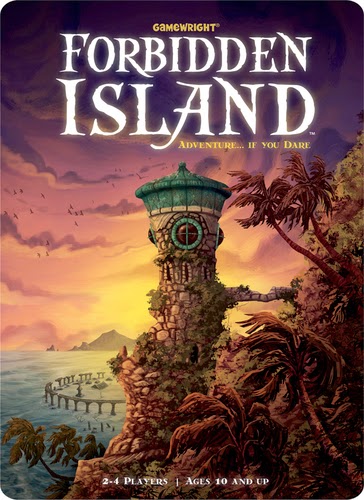
Forbidden Island, $17.99: This one might require some adult guidance, but it’s perhaps one of the best examples of a “cooperative” game (without the more intense, real-world theme of such classics as Pandemic). Players try to retrieve four treasures from an island sinking in to the sea, simulated by location tiles that randomly flood and then disappear entirely. Each has a different role with special advantages, but they all must work together to move around the board, collect resources, shore up flooding tiles, reach the treasures, and escape before the island submerges completely. Forbidden Island’s numerous accolades include the prestigious Mensa Select Award.

Beyond $25

I’d recommend almost any board game beyond the mundane fare one can find at Target or Barnes & Noble. Both chains have become more open-minded about stocking games that cater to the growing sophisticated board game culture characterized by such popular titles as Settlers of Catan, Ticket to Ride, Small World, and Carcassonne. Your Friendly Local Game Store is also a good place to browse possible board game gift ideas, ask the staff and regulars, and special order anything that isn’t in stock.

Why $25?

A few months ago I polled some folks on Google+ to help guide me in where to set the bar on this article. I asked:

What’s the maximum dollar amount you would spend on a non-electronic, game-related holiday gift for a young person between the ages of 5 and 11?

Assume the person is someone to whom you’d usually give a gift at the holiday and that the gift would be in some way related to the adventure gaming hobby, meaning it would expose them to or inspire them to explore roleplaying, card, board, and wargames (of both the board-and-chit and miniature variety). I’m not considering electronic games. Many thanks for sharing your opinions.

The $25 mark easily scored around two-thirds of the responses, with other amounts garnering a few votes here and there...and nobody going for the $100. At least one voter commented on the high cost to buy into games these days, whether a high-end board game, roleplaying game, or certainly a miniatures game. Although $50 or even $100 might buy an experienced gamer an appropriately pleasing gift, to tempt non-gamers or children into the adventure gaming hobby with an expensive gift that may or may not engage their enthusiasm remains a risky proposition.

Whatever your budget, keep games in mind as gifts this holiday season. Support your Friendly Local Game Store and encourage and cultivate a positive community of gamers in your area.

Comments....
Want to share your suggestions for $25 game gift ideas for the non-gamer set? Start a civilized discussion? Share a link to this blog entry on Google+ and tag me (+Peter Schweighofer) to comment.


Tuesday, October 28, 2014

Assembling Terrain for Valley of the Ape

Development on my Valley of the Ape kids’ game proceeds at a slow but steady pace. I have a workable draft of the rules and a solid idea what additional bits I need to prepare (explorer cards with rules summaries and encounter tiles). But the rulebook and other materials form only half the project, although the part I can most easily share online once completed. Along with the game design work comes the hobby work assembling and crafting miniature wargaming-style terrain for the playable bits of the game.

A selection of aquarium plants
from PetSmart.
Some of this material I own already, stored in various boxes beneath or near the four-by-eight-foot wargaming table in the basement. These include a swath of dark green felt dappled with paint to vary the terrain surface, numerous 54mm plastic soldiers (Zulus, British, Dervishes) from Armies in Plastic to represent explorer parties, the giant ape from Safari Ltd. I bought at a craft store, and a resin-cast giant man-eating plant I picked up years ago from Armourcast (though it could use a better paint job).

"Betta" foliage cut for better coverage.
I have considerably more work to do with jungle foliage and terrain. I’ve already sculpted a few foam hills and prepped some palm trees out of wire, artificial plant leaves, and masking tape. But to fill out large portions of impassible jungle terrain I needed a lot of fake yet exotic-looking foliage. So I drove on down to the local big-box pet store, PetSmart, and spent some time browsing their aquarium section. I found a host of very affordable pieces from Top Fin, including some single plantsfor $0.99, a few “peacock feather” plants with a nice high profile ($2.99), and – perhaps the most versatile find – two varieties of what they call “betta” artificial aquarium plants, plastic grids with small plant bits mounted at each intersection (for $1.99). These last ones provided versatile jungle cover, particularly when split along the middle or diagonally to make two uneven halves that, when positioned unevenly, offer some natural-looking uneven terrain. For less than $20 one could buy enough jungle foliage to set up some challenging and good-looking terrain; augmented with some custom pieces it’ll make for an easy-to-set-up “board” for Valley of the Ape.

A scene hastily assembled from my terrain,
including the giant ape and some Armies
in Plastic Zulus.
I’m debating whether to craft my own temple ruins from bits prepped for old Egyptian temple projects or just pay for one of the fish tank temples available from PetSmart (some manufactured by Top Fin and others by National Geographic).

Once that’s decided and I finish up the palm-tree terrain pieces I’m ready to set everything up and start playtesting the rules.

Armies in Plastic Addendum

Folks who read Hobby Games Recce know I love the 54mm (1:32 scale) unpainted plastic figures from Armies in Plastic, including the ones from my collection I’ve drawn upon to serve in my Valley of the Ape game (Victorian-era British soldiers, Zulu warriors, Dervishes). They’re big, historically themed, and great for small hands (or my clumsy fingers). The prices have crept up over the years as the figure count has recently diminished (20 infantry figures down to 18 or 16 in some cases). But I recently happened by the Armies in Plastic website to find an interesting sale: the company put their Battlefield Combo boxes on sale, an 18- or 20-figure mix from both sides of a conflict for $12 (the regular price for 18 or 20 figures in other sets is now $17...). Of particular note for my own gaming interests are 6 British Army in Shirtsleeves and 12 Zulus, as well as combos including Dervishes. Those interested in the burgeoning French and Indian war genre might like 8 Rangers and 12 Indians for skirmishes. Other periods include the American Revolutionary War, Boxer Rebellion, World War I, Napoleonic Wars, some Civil War, and modern conflicts. They’re a fun way to provide large, plastic soldiers to fight period skirmishes – or just to play with – at an affordable price.

Armies in Plastic Rangers fend off a
Woodland Indian Ambush.
I’ve recently been bitten by an inexplicable bug to dive into reading about and wargaming skirmishes from the French and Indian War...and my collection of Armies in Plastic miniatures lacks anything from the American Colonial period (having focused more on 19th century British colonial wars). Seeing the Ranger/Indian Battlefield Combo sets at the Armies in Plastic website – plus a “buy 3 get 1 free” promotion – I decided to order some sets directly from the company.

Normally I try to give my business to local stores (none of which stock Armies in Plastic sets, although I first discovered and bought my first Armies in Plastic sets from a now out-of-business hobby shop in Fredericksburg) and, barring that, wait patiently for one of the small, local wargaming conventions where vendors occasionally have a limited selection. But I was looking for something quite specific, and knowing how the prices have crept up recently, wanted to take advantage of a really good deal. So I ordered two sets of the Rangers/Indians, plus one with Loyalists and Militia (10 each, plus a cannon), and, for my “free” set, ordered British infantry (20 figures). Three days after placing my order the box arrived at my doorstep. Along with the French and Indian War skirmish rules set I bought earlier and with some old forest terrain I can now start exploring period battles with a minimum of work. Sure, the purists might scoff that I’m using unpainted figures, but I have two ready made forces in an appealing size. Thanks to Armies in Plastic for the good deals and excellent service.

Comments....
Want to offer feedback? Start a civilized discussion? Share a link to this blog entry on Google+ and tag me (+Peter Schweighofer) to comment.


Tuesday, October 7, 2014

“War” Inspired Battlefield Card Game

I don’t know why the card game “War” has been on my mind lately. I played it a few times as a kid more to pass the time than anything else; but as an adult game designer I realize, much as game design luminary Greg Costikyan posited, it’s not much of a game considering the completely random elements and lack of player choice (to which variants only add small, limited degrees of strategy). It’s an odd enigma among games – if you want to even call it a “game” – yet it incorporates some game-like elements: drawing and playing cards, comparing card values, and collecting “tricks” used for scoring.

The 5 of Clubs helps reinforce the meager 4 of Diamonds.
This inexplicable fascination feeds off my general predilection for developing new game designs and for adapting them to themes I find interesting (usually rooted in historical periods). The attraction to a basic childhood pastime ties into my urge to create games accessible to both a young audience and newcomers to the adventure gaming hobby.

In examining what few rules the “game” of “War” has, several elements stand out that I like in gameplay: pitting cards against each other with the higher value winning; the escalation mechanic when two cards tie (in which additional cards are drawn, with the top ones revealed to break the tie, winner take all); and a clear scoring mechanic of the player with the most cards at game’s end wining. But I also notice several deficiencies related to the obvious lack of any player choice to affect the game’s outcome: players have no hand from which to choose particular cards; they have only one position to deploy them and one opponent to face on the field; and even when additional cards are drawn to break ties, the result still boils down to comparing two completely random card values. A little bit of casual internet research shows a frightening number of “War” variants exist, some offering more player choice and strategy than others.

Since I have a passing interest in wargames (as well as other adventure games) I sought to infuse the basic concepts of “War” with some elements of battlefield strategy, enabling some meaningful player choice along the way and creating an entirely new game with a military theme playable with a standard deck of cards.

Battle Lines

I’m calling my “War” inspired game Battle Lines since that perhaps best characterizes the game’s core mechanic. Like “War,” players begin by evenly dividing one deck of cards (with the jokers removed). Each turn they draw or “draw up” to a hand of four cards. From these they deploy three to their battle line, one on the left flank, one in center, and one on the right flank; each of these stands opposite a card the opponent deploys in similar fashion. This leaves one card in each player’s hand as a sort of “reserve.”

Players reveal all their cards on the battlefield, comparing cards matched up in the same locations: one’s left flank to the other’s right flank, the center cards against each other, and 0ne’s right flank to the other’s left flank. The highest card captures the lower card in each contest (with face cards valued at 11, 12, and 13 respectively, and aces worth 14). Before anyone takes cards on the flanks, the player with the lower card may play his reserve card and add its value to his card in the battle line; but this flanking reserve card must either have the same suit as one of the cards played to that location. For instance, Player A plays the four of diamonds on his left flank opposing the seven of clubs Player B deployed to his right flank; Player A needs to have a card with diamonds or clubs to reinforce and increase his total, presumably higher than the opponent’s card (like in the photo at the top of this post). Cards deployed and captured at each position go into the winner’s discard pile. Should any confrontations result in a tie, each card on the line returns to the respective player’s hand; reserve cards used to achieve tied values go into the discard pile of the player who deployed them. The next turn players draw enough cards from their deck to make a four-card hand (three cards if they didn’t deploy reserves, four if they did).

The game ends when one player’s deck runs out, resulting in one last deployment with the player possessing fewer cards deploying them last (possibly having battlefield positions without cards, which the opponent wins by default). Each player counts their discard pile; the one with more cards wins the battle.

There’s a little more room for strategy than in “War” itself. Players have to evaluate their four-card hand to determine what they want to play to the flanks, where the reserve card might help them. After players reveal cards on the battle line they have to determine if they want to play a flank card based on their own cards or those their opponent plays to his flanks. And both players must evaluate and try to second-guess their opponent’s general deployment strategy (if any) within the limited seven, eight, or nine turns enabled by the small deck sizes; does the opponent tend to place strong cards in the center, or does he have any rationale to playing certain cards to the flanks?

The only rule I’m waffling on is what to do with tied cards in a battlefield location. Right now I think it best for them to return to their respective players’ hands, giving opponents a glimpse of what might come into play next turn. I’ve considered keeping them on the battlefield but forcing players to deploy them to different, non-opposed positions.

I’ve modified a few ways certain mechanics in “War” work to better mold the game. Battle Lines still retains elements like splitting the deck evenly between two players, drawing cards from the top of that randomized deck, and resolving combat by comparing the values of two cards. The differences alter or evolve from parts of “War,” particularly using a discard pile to determine the winner instead of feeding captured and used cards back into the active draw deck, deploying several cards at once against matched opponent cards, and using the extra “reserve” card to sway individual battlefield contests in one player’s favor.

So that’s my “War” inspired card game you can run with a standard deck of playing cards. Give it a try, offer some feedback (see the “Comments” boilerplate below...) and I’ll see if it deserves some revision and publication in some form or another, just for fun.

Comments....
Want to offer feedback? Start a civilized discussion? Share a link to this blog entry on Google+ and tag me (+Peter Schweighofer) to comment.


Tuesday, September 16, 2014

Developing Valley of the Ape

Here I go again, charging off into the wilderness to pursue a spontaneous game-design fancy while leaving behind several far more substantive projects that really deserve my attention. My latest impulse emerged from an experience the Little Guy and I had at Historicon and my urge to transition his free-form play activities into something slightly more structured yet still entertaining (and maybe get a convention event out of it). I’m tentatively calling it Valley of the Ape.

Kim Allman’s “Jungle Gods” game at Historicon 2014
It all started the first day I took the Little Guy to Historicon this past July. We were just going to pick up pre-reg badges and programs, look around the dealers hall, and see what games were playing. After marveling at Tim Broome’s massive “Sword Beach” set-up the Little Guy immediately gravitated toward a lush table strewn with clumps of jungle foliage, ruins, and a muddy river...Kim Allman’s “Jungle Gods” game in which a host of explorers and mercenaries (including Teddy Roosevelt in a small river steamer) seek lost treasure in Africa around 1900. Having been fully indoctrinated into the giant monster movie genre by Mommy – including such Japanese fare as King Kong vs. Godzilla and King Kong Escapes – he was immediately drawn to the giant gorilla rampaging among the 25mm figures. While the Little Guy surveyed the table (and looked with glee at the as-yet-unrevealed wild animal miniatures the referee brought out for him) I glanced over the table and at the various gamey bits strewn along its margins. The game used the Valor & Steel & Flesh rules and seemed adequately complicated for Historicon, but a bit of a stretch for “children under 12 allowed with an accompanying adult player” as the event description noted in the program. The entire drive home I listened to the Little Guy talk about how he wanted to play a King Kong game in which he played the giant ape and moved around the table attacking all the smaller figures strewn across the jungle. Thus an idea was born.

I immediately began compiling a short list of essential components: figures, terrain, and, of course, some rules framework and associated accessories to facilitate gameplay with a younger audience (a subject of a recent Hobby Games Recce missive).

Kim Allman’s “Jungle Gods” game at Historicon 2014
I always try to use “toys” I already own for such projects. A ready stock of useful bits await near my basement wargaming table from which I can easily draw pieces and terrain. I have a host of 54mm plastic figures from Armies in Plastic – Zulus, British infantry, Dervishes – from which I could draw various forces; the fact that they are single-tone plastic and larger than more traditional 25mm, hand-painted metal wargaming minis means they’re easier for little hands to manipulate and can sustain some rough play. I have some miniature “set pieces,” as I call them, wargaming terrain bits I can swap to different games, plus a vast piece of deep green felt dappled with browns and lighter greens for a basic play surface.

But I do not own many elements essential for such a showcase game. I need several bases covered in lush foliage made from aquarium plants and other fake greenery. A few marshy terrain sections would help, too. I’m not sure my Egyptian-style temple would work well in its non-ruined state as the centerpiece and repository for the key treasure. Luckily the local pet store carries a relatively inexpensive line of plastic aquarium plants and, if I want to spring for it, some adequate jungle-ruin pieces.

But, of course, the biggest challenge remains crafting a rules framework for defining the various groups exploring the Valley of the Ape and its numerous hazards, including the eponymous ape; much of this I intend to summarize on cards for each faction or foe.

Kim Allman’s “Jungle Gods” game at Historicon 2014
My ultimate goal is twofold: to create a game engine and wargaming terrain environment so the Little Guy and I (and maybe some friends, or Mommy) can enjoy some structured play with Daddy’s toys; and to create a game, brief rulebook, handouts, and an engaging visual tabletop wargaming display to run this as a kid-friendly convention event.

Without going into the details of game mechanics, I’m focusing on a few elements central to the experience of playing a danger-filled treasure hunt in deepest, darkest Africa:

Explorers: Each group of explorers has some pretty basic wargaming traits – movement rates, ranges and chances to hit targets – with some variations in those and a few special advantages, all with a decent degree of balance. Some can move through otherwise impassible jungle terrain and can take cover from other groups in that terrain, potentially negating successful hits. Others have increased ranges and chances to hit. I’ve done my best to balance these advantages, though I expect I’ll note some disparities during actual play. Although they can attack each other at long range or in close combat, they can only attack the giant ape at long range.

Giant Ape: I found a large plastic ape figure which, while not to really monstrous scale, will suffice as “Mungo” (a slight change lest my use of “King Kong” in any capacity rouse the ire of the copyright infringement trolls). The referee – or I expect my Little Guy – will end up controlling his actions, with a basic, programmed urge to move to and attack the nearest party, or the one which last attacked at a distance. He can only attack a group after moving into contact with it, not a huge difficulty given a 12-inch move allowance, twice as much as the explorers. He inflicts 1d6 hits (not sure if I’ll allow the better of two die rolls to give him a slightly more lethal advantage), eliminating one explorer figure for each hit (with the exception of the big game hunter, who can take three hits) before sending the survivors fleeing six inches toward the nearest table edge (giving them some help in retreating further from Mungo if they want). I’ve decided he can take up to 30 hits before he’s defeated, meaning I can use a recently acquired, large d30 to track hits.

Hazards and Treasures: I initially decided that the explorers who delivered the fatal attack defeating Mungo win the game. This might make games extremely focused and thus quite short, discouraging players from maneuvering around the terrain. I’ve devised a mechanic to encourage players to send their explorers across the board seeking treasure and inadvertently uncovering additional hazards. I’m using a “blind” system of cards, each with an “X marks the spot” graphic on the back, but containing either treasure or a hazard on the other side. Treasures give players victory points while hazards cause their forces to take damage or lose a turn; in some cases hazards might introduce smaller monsters (like a T-rex or giant octopus, depending on any extra toys I acquire) to roam the table like Mungo. Defeating the giant ape, of course, would bring in the most points, with all other treasures and defeated monsters granting smaller rewards that might add up and enable someone to win the game without vanquishing Mungo.

We’ll see how this develops; perhaps some previews or in-progress work might find its way to Hobby Games Recce. If it all comes together, I’ll compile the rules and player handouts into a small booklet for general distribution; but first I need rules on paper, more terrain, those hazard cards, and a few games with the Little Guy to see how things work out.

Comments....

Want to offer feedback? Start a civilized discussion? Share a link to this blog entry on Google+ and tag me (+Peter Schweighofer) to comment.