“Half a truth is often a great lie.”
– Benjamin Franklin
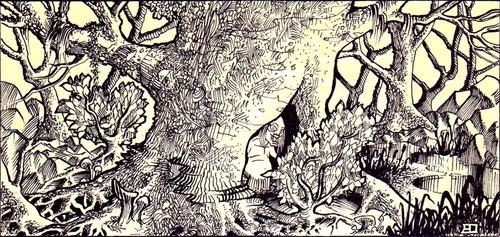
![]() |
| Would you trust any rumors about this crazy hermit? |
“Half a truth is often a great lie.”
– Benjamin Franklin
![]() |
| Would you trust any rumors about this crazy hermit? |
“A hero is an ordinary individual who finds the strength to persevere and endure in spite of overwhelming obstacles.”
– Christopher Reeve
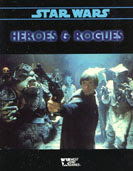
For many Star Wars fans – especially the recent ones – West End Games Star Wars Roleplaying Game is all but unknown. Almost 25 years after its bankruptcy and two or three additional versions of a Star Wars roleplaying game later, most folks focus more on the latest Star Wars media, with roleplaying games taking a back seat to the latest movies and streaming series. But there was a time when West End’s game helped reignite interest in Star Wars, expanding the universe with a flood of continuity (some might say an unmanageable flood) and new ways to look at that galaxy far, far away beyond what we saw in the original trilogy. Much of that was cast aside after Disney acquired Lucasfilm – an understandable move given the daunting amount and variable quality of in-universe information to track – but some of us watch the recent Disney+ streaming series and crack a slight, pained smile when we recognize something West End created that managed to endure this long. West End didn’t simply amass vast piles of information to create a galaxy of continuity and verisimilitude; it expanded our sense of what was possible within the setting, the different characters we might find and the different stories they might tell. While the first edition core roleplaying game began this trend upon its release in 1987, subsequent publications pushed us to explore different corners of the galaxy. Heroes & Rogues was among the best of those products.
“Reality is merely an illusion, albeit a very persistent one.”
– Albert Einstein
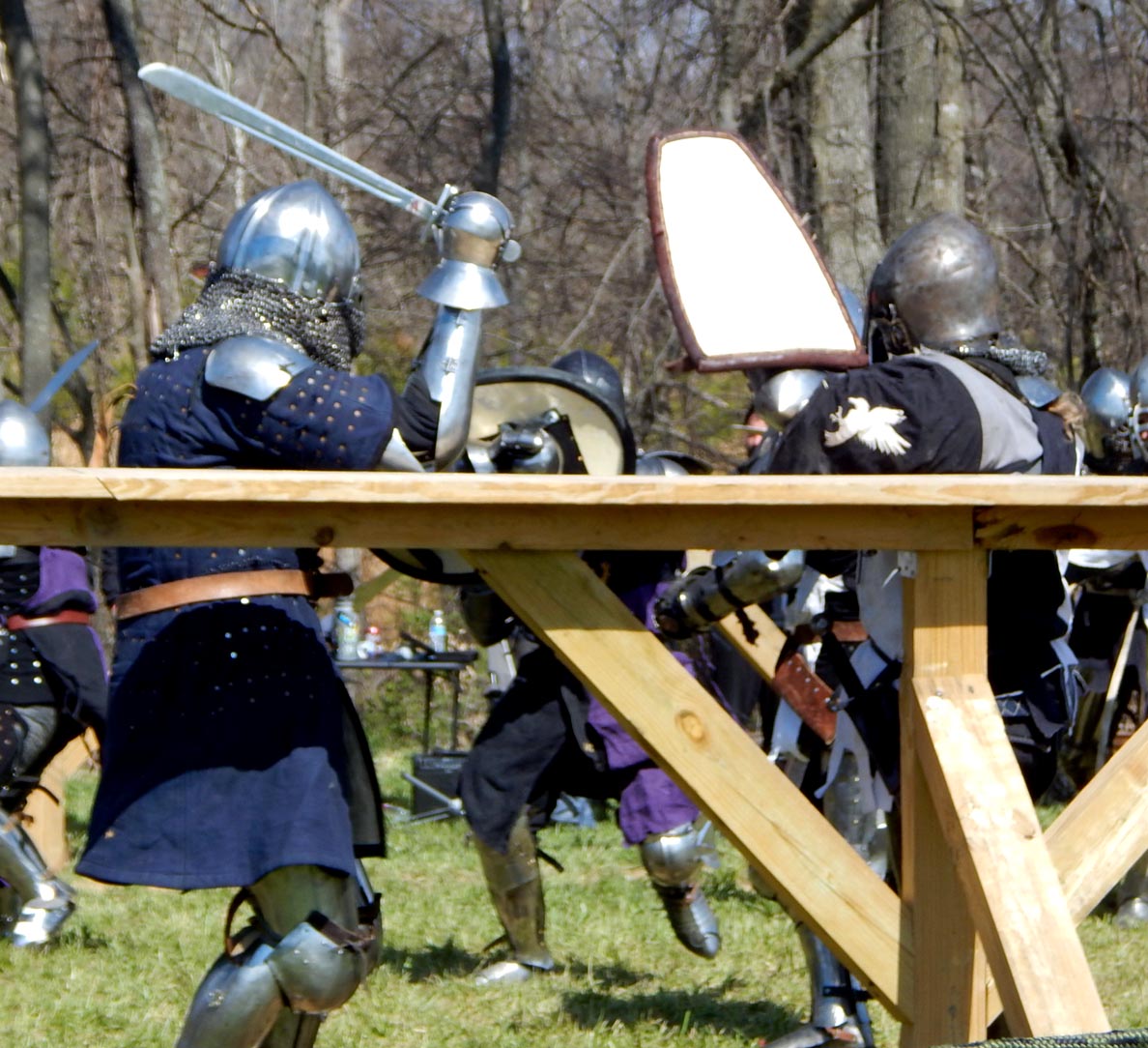
Back in April my son and I attended a “buhurt” medieval combat sport event, “Mead and Mayhem,” at a nearby winery. Several teams from the east cost battled in the lists in a regulated melee. Participants wore period-authentic armor and bashed at each other with blunted weapons certified to the league rules, with no thrusts, no hitting certain spots, until an opponent goes down (at least one hand on the ground). The first day teams of five armored opponents bashed at each other in the heavy wood-rail arena (the “list”) while an audience of about 150 cheered them on (fueled, of course, by wine, beer, and mead...). As a medieval enthusiast I enjoyed it; my son quickly let himself get caught up in the action, despite my droning historical commentary. Despite the rules each melee demonstrated the power and brutality of medieval combat...and showed how such fights often took less than two minutes to bring one team of five to victory. Of course in my head I started comparing it to combat in roleplaying games, particularly my favorite Basic/Expert Dungeons & Dragons. Although that’s a fantasy roleplaying game grounded in some aspects of the real world, in actuality trained, armored opponents clashing in battle goes pretty quickly.
“Do not…keep children to their studies by compulsion but by play.”
– Plato
I admire Professor Scott Nicholson’s scholarly work about games. He inspires people to look at different aspects of games with a more critical eye, particularly in an educational setting. And he helps fuel my interest in games for learning, using game experiences inside or outside a classroom to encourage people to expand their horizons. His latest project – EscapeIF – uses educational storytelling (in a familiar programmed text adventure format) to provide an innovative and engaging framework for classroom learning. In exploring EscapeIF I realized this format relies on three core elements – narrative, challenge, and reflection – all of which easily apply to teaching as well as our own game experiences.“We do not stop playing because we grow old, we grow old because we stop playing!”
– Benjamin Franklin
My
grandmother, who lived to be 100 years old, often gave me this
advice, with a mischievous look yet a tone of resignation in her
voice: “Don’t get old.” Now
I’m a bit
past 50 and have been feeling “old” creeping up on my weary,
mortal form
for
a while now. Mostly it’s just aches and pains, sore muscles taking
longer to heal, my eyesight getting worse, my fingers a bit more
inept.
Now
and then I notice some physical limitation or other while I’m
engaged in gaming activities. I
still enjoy numerous
manifestations
of my adventure gaming hobby, but some are beginning to present
slightly
greater physical
challenges. I often wish publishers might take such factors into
account, though for now I find my own ways to manage.
Am I getting old and crazy
like the hermit in B2? Probably....
“This is one of the best intros to RPGs I’ve ever seen.”
– Andrew Rilstone, Arcane magazine
This year’s GAMA trade show recently wrapped up. The occasional posts from folks who attended stir up memories of the few times I went with West End sales managers to promote our games, especially the Star Wars Adventure Journal and the roleplaying game. It was more than 25 years ago, so my memory remains foggy, but I recall going three times to GAMA: in New Orleans, LA, Reno, NV, and Atlantic City, NJ. These offered good opportunities to promote games face-to-face with store owners and spend off hours chatting with colleagues in other companies. At one of these the then-sales manager at Iron Crown Enterprises traded me a copy of the company’s boxed Lord of the Rings Adventure Game published back in 1991. Combined with my nostalgic love of boxed sets and my urge to introduce newcomers to the adventure gaming hobby, it provided the inspiration for the Star Wars Introductory Adventure Game.